English
 Español
 tiếng việt
 русский
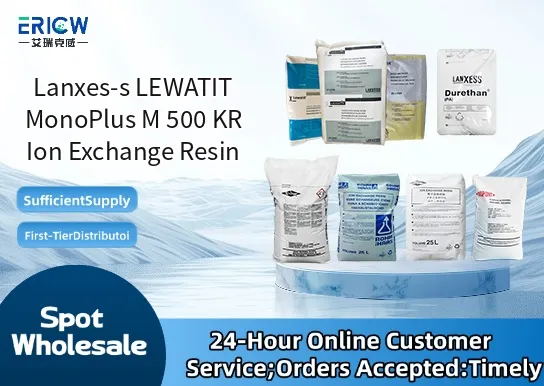
Highly uniform spherical beads ensure consistent hydraulic performance and low pressure drop across packed beds.
Exceptional chemical stability in strong acid environments, enabling reliable long-term operation in aggressive process conditions.
Optimized for high selectivity toward potassium (K⁺) and ammonium (NH₄⁺) ions, supporting precise cation removal and recovery.
Low fines generation and excellent mechanical strength reduce resin attrition and extend service life under cyclic regeneration.
Regenerable with standard mineral acids (e.g., HCl or H₂SO₄), offering cost-effective and sustainable ion exchange cycles.
Potassium removal from industrial process streams in pharmaceutical and fine chemical manufacturing.
Ammonium recovery and polishing in wastewater treatment plants prior to discharge or reuse.
Softening and selective cation exchange in food-grade water preparation systems.
Pre-treatment of feedwater for boiler systems requiring ultra-low alkali metal content.
Cation exchange step in hydrometallurgical processes for selective metal ion separation.
| Chemical Type | Strongly acidic cation exchange resin (sulfonic acid type) |
| Product Form | Moist, spherical gel-type beads |
| Appearance | Opaque amber to light brown beads |
| Functional Group | –SO₃H (sulfonic acid) |
| Ionic Form | H⁺ form (hydrogen form) |
| Moisture Content | 48 – 52 % (w/w) |
| Particle Size Range | 0.3 – 1.2 mm |
| Uniformity Coefficient | ≤ 1.6 |
Q1: What is the primary functional group and ionic form of LEWATIT MonoPlus M 500 KR?
A: LEWATIT MonoPlus M 500 KR is a strongly acidic cation exchange resin based on a styrene-divinylbenzene matrix, functionalized with sulfonic acid groups. It is supplied in the potassium (K⁺) ionic form, optimized for selective removal of multivalent cations such as calcium, magnesium, and heavy metals from aqueous streams.
Q2: How does M 500 KR differ from standard sodium-form strong acid cation resins in water softening applications?
A: Unlike conventional Na⁺-form resins used primarily for hardness removal via ion exchange with sodium release, M 500 KR in K⁺ form minimizes sodium introduction into treated water—making it especially suitable for applications where sodium content must be tightly controlled, such as in pharmaceutical water polishing or specialized food-grade process streams.
Q3: Can this resin be used in high-purity water systems, and what regeneration considerations apply?
A: Yes, M 500 KR is compatible with high-purity water production when integrated into multi-step deionization trains. Regeneration is typically performed using potassium chloride (KCl) solution to maintain the K⁺ form; acid-based regeneration is not recommended as it may compromise selectivity and long-term stability for targeted cation removal.
Q4: Is M 500 KR suitable for use in food, beverage, or pharmaceutical processing water treatment?
A: LEWATIT MonoPlus M 500 KR is designed for industrial and process water treatment and complies with general regulatory expectations for ion exchange resins used in indirect contact with food- and pharma-grade water. End-use suitability requires validation per facility-specific regulatory requirements and compatibility testing with the intended process stream.
Contact With Us:
E-mail: wangxingqiang@ericwchem.com
Have a Questions? Call Us:
Add:
Building A1, Jiete Industrial Park, Huangpu District, Guangzhou City, Guangdong Province, China