English
 Español
 tiếng việt
 русский
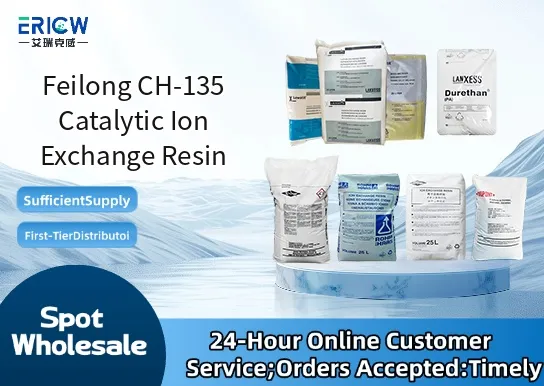
Highly selective catalytic activity for esterification and transesterification reactions under mild conditions.
Thermally stable up to 150 °C, enabling robust performance in continuous fixed-bed reactor systems.
Sulfonic acid functional groups grafted onto a macroporous polystyrene-divinylbenzene matrix ensure low leaching and long service life.
Low pressure drop and excellent hydraulic stability due to uniform spherical bead morphology (0.3–1.2 mm particle size).
Regenerable with dilute acid washes, supporting sustainable operation and reduced chemical consumption.
Biodiesel production via catalytic transesterification of vegetable oils and waste cooking oil.
Ester synthesis in fine chemical manufacturing, including flavor & fragrance esters and pharmaceutical intermediates.
Continuous-flow dehydration reactions such as acetic acid + ethanol → ethyl acetate + water.
Removal of trace metal ions and acidic impurities in specialty solvent purification streams.
Catalytic upgrading of pyrolysis oil by esterification of free fatty acids to improve stability and heating value.
| Chemical Type | Sulfonated macroporous strong acid cation exchange resin |
| Product Form | Moist, spherical beads |
| Appearance | Off-white to light tan, free-flowing granules |
| Functional Group | –SO₃H (sulfonic acid) |
| Ion Exchange Capacity | ≥4.2 mmol H⁺/g (dry basis) |
| Moisture Content | 45–55% (as supplied) |
| Particle Size Range | 0.3–1.2 mm (≥95% retained on 16–60 mesh screens) |
| pH Stability Range | 1–14 (non-oxidizing environments) |
Q1: What is the primary catalytic function of Feilong CH-135 in esterification and transesterification reactions?
A: Feilong CH-135 functions as a solid acid catalyst, leveraging its sulfonated polystyrene matrix to provide strong Brønsted acidity. It facilitates proton transfer in condensation and exchange reactions without leaching active species, enabling cleaner product streams and simplified downstream separation.
Q2: How does CH-135 differ from conventional strong acid ion exchange resins used in water treatment?
A: Unlike standard water softening resins optimized for reversible cation capture, CH-135 is engineered for catalytic stability under elevated temperature and low-water conditions. Its crosslinking density, functional group distribution, and thermal resilience are tuned specifically for continuous liquid-phase organic synthesis—not ionic removal.
Q3: Can CH-135 be regenerated and reused after catalytic cycles?
A: Yes—CH-135 exhibits good regenerability following appropriate solvent washing (e.g., methanol or acetone) to remove adsorbed organics. Performance retention depends on operating conditions; extended exposure to high temperatures (>120 °C) or strongly basic media may gradually reduce acid site integrity over multiple cycles.
Q4: Is CH-135 compatible with common industrial solvents and feedstocks such as fatty acids, glycerol, and short-chain alcohols?
A: CH-135 demonstrates broad compatibility with polar protic and aprotic solvents, including methanol, ethanol, ethyl acetate, and glycerol. It remains physically stable in the presence of free fatty acids and shows minimal swelling or fragmentation under typical esterification process conditions.
Contact With Us:
E-mail: wangxingqiang@ericwchem.com
Have a Questions? Call Us:
Add:
Building A1, Jiete Industrial Park, Huangpu District, Guangzhou City, Guangdong Province, China