English
 Español
 tiếng việt
 русский
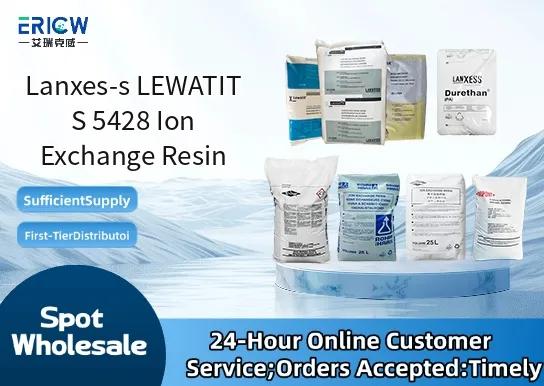
Highly selective for divalent cations such as Ca²⁺ and Mg²⁺, enabling efficient softening with low regenerant consumption.
Exceptional physical and chemical stability in repeated swelling/shrinking cycles, ensuring long service life under dynamic operating conditions.
Uniform spherical bead morphology with narrow particle size distribution for consistent hydraulic performance and minimal pressure drop.
Optimized for high flow rates and low leakage, delivering reliable water quality compliance in industrial and municipal systems.
Sulfonic acid functional groups grafted onto a highly cross-linked polystyrene-divinylbenzene matrix for robust acid resistance and thermal tolerance.
Industrial boiler feedwater softening to prevent scale formation and extend equipment lifespan.
Precise demineralization in pharmaceutical-grade pure water production (PW/UPW) systems.
Pre-treatment for reverse osmosis (RO) and electrodeionization (EDI) units to protect downstream membranes and stacks.
Municipal drinking water hardness reduction meeting WHO and EPA regulatory standards.
Process water conditioning in food & beverage, electronics manufacturing, and power generation facilities.
| Chemical Type | Strong Acid Cation (SAC), sulfonated polystyrene-divinylbenzene |
| Product Form | Moist, spherical beads (Na⁺ form standard) |
| Appearance | Opaque amber to light brown uniform beads |
| Primary Applications | Water softening, demineralization, pretreatment for membrane processes |
| Functional Group | Sulfonic acid (–SO₃H) |
| Matrix Structure | Polystyrene cross-linked with ~8% divinylbenzene (DVB) |
| Ion Exchange Capacity (dry basis) | ≥ 2.0 eq/L (as H⁺ form), ≥ 1.9 eq/L (as Na⁺ form) |
| Moisture Content | 46–50% (as shipped, Na⁺ form) |
Q1: What is the primary functional group and ionic form of LEWATIT S 5428?
A: LEWATIT S 5428 is a strongly acidic cation exchange resin based on a sulfonated polystyrene-divinylbenzene matrix, supplied in the sodium (Na⁺) form for general softening and selective metal removal applications.
Q2: Is LEWATIT S 5428 suitable for potable water treatment?
A: Yes — when operated and regenerated according to manufacturer guidelines, LEWATIT S 5428 complies with common regulatory frameworks for drinking water contact materials, including NSF/ANSI Standard 61. Final system validation remains the responsibility of the end-user or system designer.
Q3: How does LEWATIT S 5428 differ from standard softening resins like S 108?
A: S 5428 features a higher crosslinking density and optimized bead structure, offering improved kinetic performance, enhanced resistance to osmotic shock, and greater selectivity for multivalent cations — particularly beneficial in industrial process streams with fluctuating flow or feed composition.
Q4: Can this resin be used in high-temperature applications?
A: LEWATIT S 5428 is rated for continuous service up to 120 °C, though long-term stability at elevated temperatures depends on operating pH, ionic load, and regeneration frequency. For sustained high-temperature use, thermal and chemical stability testing under actual process conditions is recommended.
Contact With Us:
E-mail: wangxingqiang@ericwchem.com
Have a Questions? Call Us:
Add:
Building A1, Jiete Industrial Park, Huangpu District, Guangzhou City, Guangdong Province, China