English
 Español
 tiếng việt
 русский
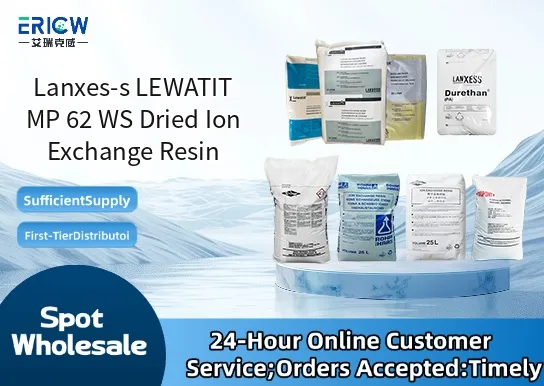
Highly stable macroporous polystyrene-divinylbenzene matrix optimized for robust performance in demanding industrial water treatment environments.
Dried format enables extended shelf life, simplified logistics, and rapid, consistent rehydration without gel swelling delays.
Uniform spherical bead morphology ensures low pressure drop, excellent hydraulic flow distribution, and minimized channeling in fixed-bed columns.
Superior chemical resistance to oxidants, chlorine, and varying pH conditions—ideal for pretreatment and polishing applications.
Engineered for high selectivity toward divalent cations (e.g., Ca²⁺, Mg²⁺, heavy metals), supporting efficient softening and trace metal removal.
Industrial boiler feedwater softening and demineralization pretreatment.
Pharmaceutical-grade purified water (PW) and water-for-injection (WFI) polishing systems.
Electronics manufacturing ultrapure water (UPW) production with stringent metal ion control.
Food & beverage process water conditioning for conductivity and hardness reduction.
Recycled wastewater polishing in closed-loop cooling and rinse water reuse circuits.
| Chemical Type | Strong acid cation exchanger (sulfonated macroporous polystyrene-DVB) |
| Product Form | Dried spherical beads |
| Appearance | Off-white to light yellow, free-flowing granular solid |
| Functional Group | Sulfonic acid (–SO₃H) |
| Ion Form | H⁺ form (ready for direct use after standard rehydration) |
| Particle Size Range | 0.4 – 1.2 mm (as supplied, dried) |
| Moisture Content (as shipped) | < 0.5% w/w |
| Storage Stability | 24 months minimum at 5–30°C in original sealed packaging |
Q1: What is the primary functional advantage of the dried form of LEWATIT MP 62 WS compared to its wet form?
A: The dried format offers significantly reduced shipping weight and volume, improved handling stability during storage, and eliminates the need for preservative solutions—making it especially suitable for long-term inventory management and applications requiring low moisture content in the final formulation.
Q2: Is Lanxes-s LEWATIT MP 62 WS compatible with high-purity water systems used in pharmaceutical or electronics manufacturing?
A: Yes—this resin is specifically engineered for ultra-high-purity applications. Its highly crosslinked macroporous structure and stringent manufacturing controls support consistent removal of trace ionic contaminants, including metal cations and weakly ionized species, without leaching organic residues under typical operating conditions.
Q3: How should the dried resin be conditioned prior to use in a deionization system?
A: Prior to service, the dried resin must be fully hydrated using deionized water—typically over several hours with gentle agitation—to restore its operational volume and exchange capacity. Subsequent acid and base regeneration steps are required to convert it into the desired ionic form (e.g., H⁺/OH⁻), following standard protocols for strong acid cation and strong base anion resins.
Q4: Can this resin be used in mixed-bed configurations for polishing applications?
A: Yes—LEWATIT MP 62 WS is commonly deployed in mixed-bed units for final polishing due to its high chemical stability, uniform particle size distribution, and balanced kinetics between cation and anion exchange components, enabling reliable production of Type I ultrapure water.
Contact With Us:
E-mail: wangxingqiang@ericwchem.com
Have a Questions? Call Us:
Add:
Building A1, Jiete Industrial Park, Huangpu District, Guangzhou City, Guangdong Province, China