English
 Español
 tiếng việt
 русский
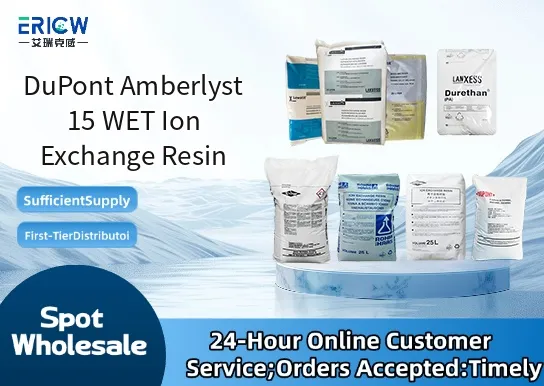
Highly crosslinked macroreticular polystyrene matrix with sulfonic acid functional groups for superior mechanical and thermal stability.
Supplied in fully hydrated (WET) form, ready for immediate use without pre-swelling or activation steps.
Excellent acid catalytic activity and selectivity in esterification, etherification, and hydrolysis reactions.
Consistent particle size distribution ensures uniform flow characteristics and low pressure drop in fixed-bed reactors.
Chemically resistant to common organic solvents and stable under repeated regeneration cycles.
Esterification of carboxylic acids with alcohols in fragrance, flavor, and plasticizer synthesis.
Production of methyl tert-butyl ether (MTBE) and other fuel oxygenates via isobutylene + methanol reaction.
Hydrolysis of acetals, ketals, and esters in fine chemical and pharmaceutical intermediate manufacturing.
Catalytic dehydration of alcohols to ethers or alkenes under mild process conditions.
Removal of trace acidic impurities from process streams in petrochemical and specialty chemical refining.
| Chemical Type | Sulfonated polystyrene-divinylbenzene copolymer (strong acid cation exchange resin) |
| Product Form | Moist, spherical beads (supplied in water) |
| Appearance | Opaque amber to brown spherical beads |
| Functional Group | Sulfonic acid (–SO₃H) |
| Ionic Form | H⁺ (hydrogen form) |
| Moisture Content | 45–50% (as shipped) |
| Particle Size Range | 0.3–1.2 mm |
| Uniformity Coefficient | ≤ 1.8 |
Q1: What is the physical form and handling advantage of the WET version compared to the dry resin?
A: DuPont Amberlyst 15 WET is supplied pre-hydrated in water, eliminating the need for time-consuming and exothermic wetting steps required with the dry form. This reduces startup time, minimizes handling risks associated with rapid hydration, and ensures consistent bed volume and hydraulic performance upon loading into columns.
Q2: Is Amberlyst 15 WET suitable for continuous fixed-bed catalytic esterification or etherification reactions?
A: Yes — it is widely used as a heterogeneous acid catalyst in continuous fixed-bed reactors for esterification, transesterification, and ether synthesis. Its macroreticular structure provides good mechanical stability and resistance to fouling under typical process conditions, supporting long operational cycles with minimal pressure drop increase.
Q3: How does temperature affect the catalytic activity and stability of Amberlyst 15 WET?
A: Catalytic activity generally increases with temperature up to approximately 120 °C; however, prolonged exposure above 120 °C may accelerate sulfonic acid group degradation and reduce long-term performance. Optimal operation typically occurs between 60 °C and 100 °C, balancing reaction rate, selectivity, and resin lifetime.
Q4: Can Amberlyst 15 WET be regenerated after performance decline?
A: While designed for single-use in many catalytic applications, reversible deactivation due to adsorbed organics or cations can often be mitigated by washing with warm water, dilute acid, or polar solvents — depending on the nature of fouling. Irreversible thermal or chemical degradation cannot be reversed, and resin replacement is recommended when catalytic efficiency no longer meets process requirements.
Contact With Us:
E-mail: wangxingqiang@ericwchem.com
Have a Questions? Call Us:
Add:
Building A1, Jiete Industrial Park, Huangpu District, Guangzhou City, Guangdong Province, China