English
 Español
 tiếng việt
 русский
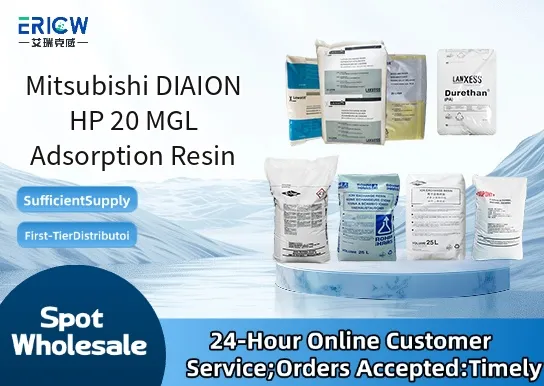
Highly porous macroporous acrylic polymer matrix designed for efficient adsorption of low-molecular-weight organic compounds.
Excellent chemical and mechanical stability across a wide pH range (1–14) and in organic solvents including methanol, acetone, and ethyl acetate.
Uniform spherical bead morphology ensures consistent flow dynamics and low pressure drop in fixed-bed column operations.
Low residual monomer content and ISO 9001-certified manufacturing process meet stringent pharmaceutical and fine chemical purification requirements.
Regenerable with common solvents (e.g., ethanol, dilute NaOH), enabling cost-effective cyclic use in continuous production systems.
Purification of natural product extracts (e.g., flavonoids, alkaloids, polyphenols) in nutraceutical and botanical manufacturing.
Removal of colored impurities and trace organics from antibiotic fermentation broths and peptide synthesis streams.
Concentration and desalting of heat-sensitive bioactive molecules prior to lyophilization or crystallization.
Decolorization and impurity polishing in the production of high-purity amino acids and organic acid derivatives.
Recovery and purification of catalyst ligands and unreacted monomers in specialty polymer synthesis processes.
| Chemical Type | Macroporous acrylic ester copolymer |
| Product Form | Wet beads, supplied in aqueous ethanol |
| Appearance | Off-white to light yellow spherical beads |
| Mean Particle Size | 0.35–0.65 mm |
| Moisture Content | ~45–55% (w/w) |
| Specific Surface Area | ~450–550 m²/g (BET) |
| Functional Group | Non-ionic (hydrophobic) |
| Maximum Operating Temperature | 80 °C |
Q1: What is the primary application of DIAION HP 20 MGL in pharmaceutical and fine chemical processes?
A: DIAION HP 20 MGL is a macroporous non-ionic adsorption resin widely used for selective removal of impurities, residual solvents, color bodies, and low-molecular-weight by-products during purification steps—particularly in APIs, intermediates, and high-value natural extracts.
Q2: How does DIAION HP 20 MGL differ from conventional ion exchange resins?
A: Unlike ion exchange resins, HP 20 MGL has no functional ionic groups and operates via physical adsorption based on hydrophobic interactions and molecular size exclusion. This makes it ideal for neutral or weakly polar compounds and avoids pH-dependent performance or salt interference.
Q3: Is DIAION HP 20 MGL suitable for use in aqueous systems, and how does it perform in mixed solvent environments?
A: Yes—it exhibits excellent stability and adsorption capacity in water, methanol, ethanol, acetone, and common water–organic mixtures. Its macroporous structure ensures consistent performance across varying polarity conditions without swelling-related mechanical degradation.
Q4: What regeneration methods are recommended for repeated use of this resin?
A: Regeneration is typically achieved using mild organic solvents such as ethanol, isopropanol, or acetone—often followed by water rinsing. Thermal or chemical degradation is minimal under standard process conditions, supporting multiple reuse cycles with maintained selectivity.
Q5: Does DIAION HP 20 MGL require pre-treatment before first use in GMP-compliant manufacturing?
A: Yes—standard pre-treatment includes washing with suitable solvents and deionized water to remove residual manufacturing agents and stabilize bed volume. For regulated applications, users should validate cleaning protocols per their internal quality procedures and applicable regulatory expectations.
Contact With Us:
E-mail: wangxingqiang@ericwchem.com
Have a Questions? Call Us:
Add:
Building A1, Jiete Industrial Park, Huangpu District, Guangzhou City, Guangdong Province, China