English
 Español
 tiếng việt
 русский
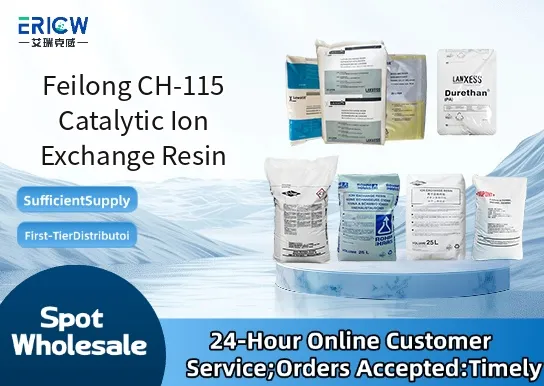
Highly selective catalytic functionality for esterification and transesterification reactions.
Sulfonic acid functional groups grafted onto a robust macroreticular polystyrene matrix.
Excellent thermal stability up to 120 °C under continuous operation.
Low leaching of active sites ensures long service life and consistent performance.
Reusability without significant activity loss after multiple reaction cycles.
Biodiesel production via methanolysis of vegetable oils and waste cooking oil.
Ester synthesis for fragrance, plasticizer, and pharmaceutical intermediates.
Continuous-flow fixed-bed reactors for green chemical manufacturing.
Dehydration reactions including etherification and condensation processes.
Acid-catalyzed hydrolysis in fine chemical and agrochemical synthesis.
| Chemical Type | Sulfonated macroreticular polystyrene-divinylbenzene copolymer |
| Product Form | Moist, spherical beads |
| Appearance | Amber to light brown opaque beads |
| Active Group | Sulfonic acid (–SO₃H) |
| Ion Form | H⁺ form (ready-to-use) |
| Particle Size Range | 0.3–1.2 mm |
| Moisture Content | 45–50% (w/w) |
| Acid Capacity | ≥4.8 mmol H⁺/g (dry basis) |
Q1: What is the primary catalytic function of Feilong CH-115 in chemical processes?
A: Feilong CH-115 is a functionalized strong-acid cation exchange resin engineered to act as a heterogeneous acid catalyst—enabling esterification, transesterification, and hydrolysis reactions under mild conditions while facilitating easy separation and reuse.
Q2: How does CH-115 differ from conventional ion exchange resins used solely for water softening or demineralization?
A: Unlike standard ion exchange resins designed for ionic removal, CH-115 features optimized crosslinking, enhanced thermal stability, and surface-modified active sites specifically tailored for catalytic turnover—not just ion adsorption—making it suitable for continuous-flow reactor systems in fine chemical synthesis.
Q3: Can CH-115 be regenerated and reused after catalytic operation?
A: Yes—CH-115 retains structural integrity and catalytic activity across multiple cycles when regenerated using standard acid wash protocols followed by thorough rinsing; performance longevity depends on feedstock purity and operating temperature profile.
Q4: Is CH-115 compatible with common organic solvents used in catalytic batch processes?
A: CH-115 demonstrates good swelling stability and mechanical resilience in polar protic (e.g., methanol, ethanol) and aprotic solvents (e.g., THF, acetone); however, prolonged exposure to strong oxidizers or highly chlorinated media is not recommended without prior compatibility testing.
Q5: What safety or handling precautions should be observed during storage and use?
A: Store in a cool, dry place away from direct sunlight and strong oxidizing agents; handle using appropriate PPE (gloves, eye protection) as with any functionalized polymeric material—no special toxicity classification applies, but dust generation should be minimized during transfer.
Contact With Us:
E-mail: wangxingqiang@ericwchem.com
Have a Questions? Call Us:
Add:
Building A1, Jiete Industrial Park, Huangpu District, Guangzhou City, Guangdong Province, China