English
 Español
 tiếng việt
 русский
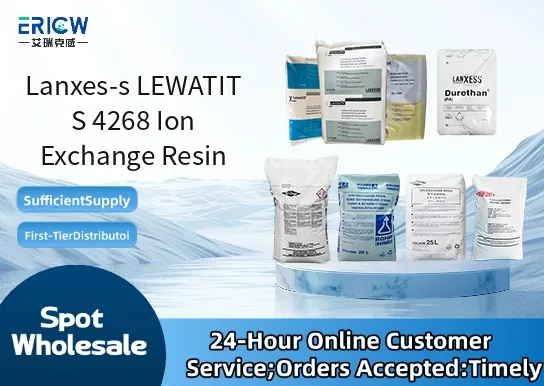
Highly selective for divalent cations such as Ca²⁺ and Mg²⁺ in softening applications.
Optimized spherical bead morphology ensures low pressure drop and uniform flow distribution in fixed-bed systems.
Excellent chemical and osmotic stability, enabling reliable performance across repeated regeneration cycles.
Low fines generation and high mechanical strength reduce resin attrition during hydraulic backwashing and service operation.
Sulfonic acid functional group provides strong-acid cation exchange capacity with rapid kinetics and full regeneration capability.
Drinking water softening in municipal and point-of-use treatment systems.
Pretreatment for reverse osmosis (RO) and nanofiltration (NF) feed water in industrial water purification.
Boiler feedwater conditioning to prevent scale formation in low-to-medium pressure steam generators.
Food & beverage process water polishing where consistent low-hardness output is critical.
Pharmaceutical-grade purified water (PW) production compliant with USP/EP requirements.
| Chemical Type | Strong Acid Cation (SAC), sulfonated polystyrene-divinylbenzene copolymer |
| Product Form | Moist, spherical beads |
| Appearance | Amber, translucent, uniform spherical particles |
| Primary Applications | Water softening, demineralization pretreatment, boiler feedwater conditioning |
| Functional Group | Sulfonic acid (–SO₃H) |
| Ionic Form | Na⁺ form (standard shipping condition) |
| Moisture Content | Approx. 45–50 % (w/w) |
| Particle Size Range | 0.3–1.2 mm (≥95 % retained on 0.3 mm sieve, ≤5 % on 1.2 mm sieve) |
Q1: What is the primary functional group and ionic form of LEWATIT S 4268?
A: LEWATIT S 4268 is a strongly acidic cation exchange resin based on a styrene-divinylbenzene matrix, functionalized with sulfonic acid groups. It is supplied in the sodium (Na⁺) form, making it suitable for softening and selective cation removal applications.
Q2: Can LEWATIT S 4268 be used in food-grade or pharmaceutical water treatment systems?
A: Yes — LEWATIT S 4268 is manufactured and tested to meet requirements for use in potable water and process water applications where regulatory compliance for indirect food contact is required. Users must verify suitability against applicable local regulations and perform system-specific validation.
Q3: How does LEWATIT S 4268 compare to gel-type resins in terms of kinetic performance and fouling resistance?
A: As a macroporous resin, LEWATIT S 4268 offers enhanced kinetic performance in solutions containing suspended solids or organic foulants, compared to conventional gel-type cation exchangers. Its rigid, high-surface-area structure provides improved resistance to physical compaction and better regeneration efficiency under variable flow or temperature conditions.
Q4: What are typical regeneration requirements for LEWATIT S 4268 in softening service?
A: Regeneration is typically performed using sodium chloride (NaCl) brine at concentrations between 8–12% w/w. The required regenerant dosage and rinse volumes depend on service cycle length, influent hardness, and system design — but generally follow standard strong-acid cation resin practices with moderate salt efficiency.
Contact With Us:
E-mail: wangxingqiang@ericwchem.com
Have a Questions? Call Us:
Add:
Building A1, Jiete Industrial Park, Huangpu District, Guangzhou City, Guangdong Province, China