English
 Español
 tiếng việt
 русский
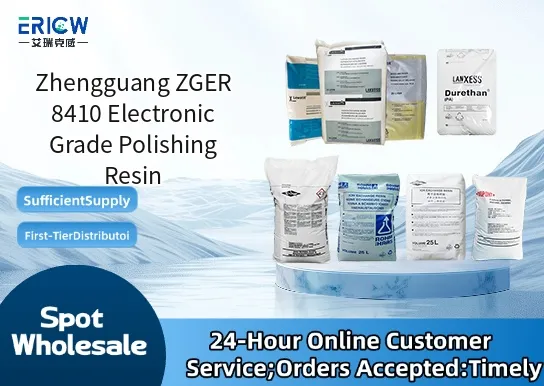
Ultra-low ionic impurity content meeting stringent electronic-grade purity requirements (Na⁺, K⁺, Ca²⁺, Mg²⁺ < 1 ppb each).
Highly uniform spherical morphology with narrow particle size distribution (D₅₀ ≈ 300–400 μm) for consistent polishing performance.
Optimized surface functionality enabling superior chelation and removal of trace metal contaminants from semiconductor process streams.
Excellent chemical stability in acidic and neutral aqueous environments, resistant to oxidative degradation during extended service life.
Low extractables profile validated per SEMI F57 standards, minimizing risk of particle generation or organic leaching in ultrapure water systems.
Final polishing stage in ultrapure water (UPW) production for semiconductor fabrication facilities (fabs).
Polishing loop treatment in advanced lithography tool rinse water recirculation systems.
Trace metal scavenging in photoresist developer reclaim lines.
Critical point-of-use purification for CMP (chemical mechanical planarization) slurry makeup water.
Post-deionization polishing in high-recovery UPW systems requiring sub-ppt metal removal.
| Chemical Type | Chelating polyacrylic acid-based cation exchange resin |
| Product Form | Moist, spherical beads |
| Appearance | Off-white to light amber, translucent spheres |
| Particle Size Range | 250–500 μm (95% by volume) |
| Moisture Content | 48–52% (as shipped) |
| Functional Group Capacity | ≥ 2.8 mmol/mL (H⁺ form, Na⁺ loading test) |
| Maximum Operating Temperature | 60 °C |
| Storage Condition | 5–35 °C, sealed container, avoid freezing and direct sunlight |
Q1: What distinguishes ZGER 8410 from standard polishing resins?
A: ZGER 8410 is specifically engineered for electronic-grade applications, featuring ultra-low ionic impurity content, tightly controlled particle size distribution, and exceptional chemical stability in high-purity aqueous systems—critical for semiconductor wafer cleaning and precision optical component finishing.
Q2: Is ZGER 8410 compatible with deionized water-based polishing slurries?
A: Yes, ZGER 8410 is fully compatible with DI water-based formulations and maintains colloidal stability without agglomeration or phase separation under typical slurry preparation and storage conditions.
Q3: How should ZGER 8410 be dispersed to achieve optimal polishing performance?
A: For best results, disperse ZGER 8410 using low-shear mixing in ambient conditions, followed by brief ultrasonication if needed. Avoid prolonged high-energy dispersion, which may alter surface functionality and affect removal rate consistency.
Q4: Does ZGER 8410 require special handling or storage conditions?
A: Store in original sealed containers at room temperature, away from direct sunlight and moisture sources. The resin is stable under these conditions for extended periods; however, exposure to high humidity or elevated temperatures may affect flowability and dispersion behavior.
Contact With Us:
E-mail: wangxingqiang@ericwchem.com
Have a Questions? Call Us:
Add:
Building A1, Jiete Industrial Park, Huangpu District, Guangzhou City, Guangdong Province, China