English
 Español
 tiếng việt
 русский
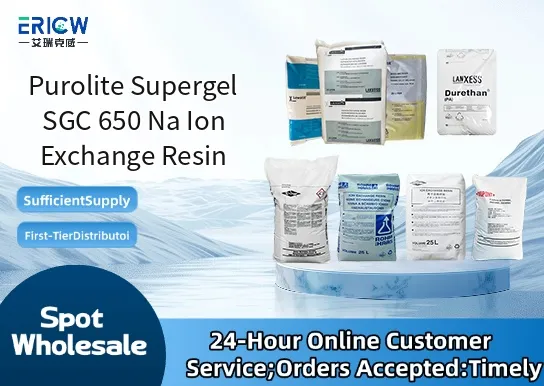
High-capacity, macroporous gel-type strong acid cation exchange resin in sodium form.
Exceptional physical and osmotic stability for extended service life under cyclic loading and regeneration.
Optimized bead uniformity and narrow particle size distribution (U.S. Sieve No. 16–50) for low pressure drop and efficient mass transfer.
Low fines generation and high mechanical strength, minimizing resin loss during backwashing and service.
Designed for reliable performance in demanding softening and demineralization applications with high flow rates.
Industrial boiler feedwater softening to prevent scale formation and ensure steam purity.
Food & beverage processing water conditioning for consistent product quality and regulatory compliance.
Pharmaceutical-grade purified water (PW) pretreatment in multi-step purification systems.
Municipal and commercial cold-process water softening for laundry, hospitality, and HVAC systems.
Pretreatment for reverse osmosis (RO) and electrodeionization (EDI) systems to protect downstream membranes and modules.
| Chemical Type | Strong Acid Cation (SAC), Sulfonic Acid Group |
| Product Form | Sodium Form (Na⁺) |
| Appearance | Amber, spherical, gel-type beads |
| Functional Group | –SO₃⁻Na⁺ |
| Ion Exchange Capacity (min.) | 1.8 eq/L (dry) |
| Moisture Content | 45–50% (as shipped) |
| Particle Size Range | 0.3–1.2 mm (U.S. Sieve No. 16–50) |
| Uniformity Coefficient (max.) | 1.7 |
Q1: What is the primary application of Purolite Supergel SGC 650 Na resin?
A: Purolite Supergel SGC 650 Na is a high-capacity, macroporous strong acid cation exchange resin in the sodium form, primarily used for softening and demineralization in industrial process water, boiler feedwater, and high-purity water systems where consistent performance under variable flow or temperature conditions is required.
Q2: How does SGC 650 Na differ from conventional gel-type cation resins?
A: Unlike standard gel-type resins, SGC 650 Na features a macroporous structure with enhanced physical stability, superior resistance to osmotic shock, and improved kinetics—making it especially suitable for applications involving frequent regeneration cycles, high suspended solids, or fluctuating feedwater quality.
Q3: Can this resin be used in food-grade or pharmaceutical water systems?
A: Yes—SGC 650 Na is manufactured and tested to meet relevant global regulatory expectations for ion exchange resins used in water purification for food and pharmaceutical applications, including compliance with USP <73> and EP 2.2.59 requirements for functional performance and extractables control.
Q4: What regeneration chemicals and typical operating conditions are recommended?
A: Sodium chloride (NaCl) brine is the standard regenerant. Recommended regenerant concentration typically ranges from 8% to 12% w/w, with dosage generally between 120–200 g NaCl per liter of resin. Optimal service flow rates depend on system design but commonly fall within 5–20 bed volumes per hour.
Contact With Us:
E-mail: wangxingqiang@ericwchem.com
Have a Questions? Call Us:
Add:
Building A1, Jiete Industrial Park, Huangpu District, Guangzhou City, Guangdong Province, China