English
 Español
 tiếng việt
 русский
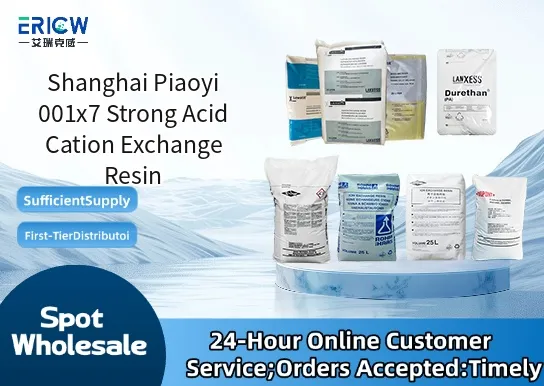
Highly cross-linked polystyrene-divinylbenzene matrix with sulfonic acid functional groups for robust cation exchange capacity.
Excellent chemical and thermal stability, suitable for repeated regeneration cycles in acidic and neutral environments.
Uniform spherical bead morphology ensuring low pressure drop and consistent hydraulic performance in fixed-bed columns.
High total exchange capacity (≥4.8 meq/mL in Na⁺ form) and strong affinity for divalent metal ions such as Ca²⁺ and Mg²⁺.
Low fines content (<0.2%) and high mechanical strength, minimizing resin attrition during backwashing and service operation.
Softening of boiler feed water and process water in power plants and industrial steam systems.
Deminerlization in mixed-bed polishing units for ultrapure water production in semiconductor and pharmaceutical manufacturing.
Removal of heavy metal cations (e.g., Cu²⁺, Ni²⁺, Zn²⁺) from industrial wastewater streams.
Catalytic support and ion-specific separation in fine chemical synthesis and hydrometallurgical recovery processes.
Pretreatment for reverse osmosis (RO) systems to prevent scaling by calcium and magnesium precipitation.
| Chemical Type | Strong acid cation exchange resin (sulfonated polystyrene-DVB) |
| Product Form | Moist, spherical beads |
| Appearance | Amber, translucent, uniform spheres |
| Functional Group | Sulfonic acid (–SO₃H) |
| Total Exchange Capacity (dry basis) | ≥4.8 meq/mL (Na⁺ form) |
| Moisture Content | 45–50% (as shipped) |
| Particle Size Range | 0.3–1.2 mm (≥95% retained on 16 mesh, passes 50 mesh) |
| Uniformity Coefficient | ≤1.6 |
Q1: What is the primary functional group and matrix structure of this resin?
A: Shanghai Piaoyi 001x7 is a gel-type, polystyrene-divinylbenzene-based strong acid cation exchange resin with sulfonic acid (–SO₃H) functional groups, providing high capacity and consistent performance in acidic and neutral aqueous environments.
Q2: Is this resin suitable for demineralization of boiler feed water?
A: Yes — it is widely applied in industrial water softening and demineralization systems, including pre-treatment for high-pressure boiler feed water, due to its excellent sodium removal efficiency and stability under repeated regeneration cycles with mineral acids.
Q3: How does temperature affect its operational performance?
A: Performance remains stable across typical service temperatures (5–50 °C); however, prolonged exposure above 50 °C may accelerate physical degradation. Optimal ion exchange kinetics and cycle life are achieved within the standard ambient-to-warm range.
Q4: Can it be used in food-grade or pharmaceutical water purification applications?
A: This grade is intended for industrial and utility water treatment. For food-contact or pharmaceutical applications, users must verify compliance with relevant local regulatory requirements and consider dedicated food-grade certified resins, as this product is not pre-qualified for direct regulatory approval in those sectors.
Contact With Us:
E-mail: wangxingqiang@ericwchem.com
Have a Questions? Call Us:
Add:
Building A1, Jiete Industrial Park, Huangpu District, Guangzhou City, Guangdong Province, China