English
 Español
 tiếng việt
 русский
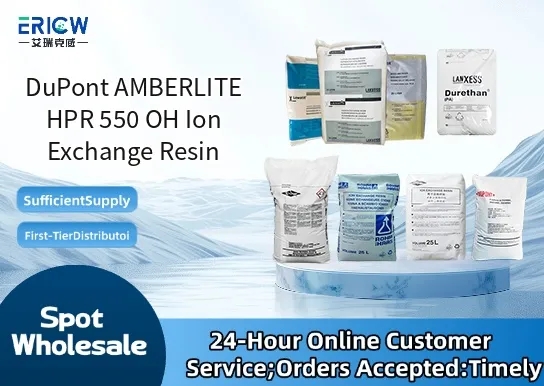
Highly uniform spherical beads for consistent hydraulic performance and low pressure drop.
Superior chemical and osmotic stability, enabling reliable operation in demanding regeneration cycles.
Optimized for high-efficiency hydroxide-form polishing in ultrapure water systems.
Low total organic carbon (TOC) extractables, minimizing contamination risk in semiconductor and pharmaceutical water loops.
Engineered with macroporous structure to enhance kinetics and resist fouling from organics and colloids.
Final polishing stage in ultrapure water (UPW) systems for semiconductor manufacturing.
Pharmaceutical-grade purified water (PW) and water-for-injection (WFI) production.
Power plant boiler feedwater polishing to meet stringent silica and conductivity specifications.
Electronics industry rinse water purification requiring ultra-low ion leakage.
Critical laboratory water systems where reproducible resistivity >18.2 MΩ·cm is essential.
| Chemical Type | Strong base anion exchange resin, Type I, OH⁻ form |
| Product Form | Moist, spherical beads |
| Appearance | Amber-colored, translucent beads |
| Functional Group | Quaternary ammonium |
| Matrix Structure | Macroporous polystyrene-divinylbenzene copolymer |
| Ion Exchange Capacity (min) | 1.1 eq/L (OH⁻ form, wet) |
| Moisture Content | 47–53% (as shipped) |
| Particle Size Range | 300–1200 µm (95% retained on 16 mesh, passes 50 mesh) |
Q1: What is the primary function of AMBERLITE HPR 550 OH in water treatment systems?
A: AMBERLITE HPR 550 OH is a strongly basic, gel-type anion exchange resin in the hydroxide form, designed for demineralization and polishing applications—particularly where high-purity effluent with low silica and total organic carbon (TOC) is required, such as in power generation, pharmaceutical water systems, and electronics-grade water production.
Q2: How does AMBERLITE HPR 550 OH differ from standard Type I or Type II strong base anion resins?
A: HPR 550 OH features a specially engineered macroporous matrix with enhanced kinetic performance and superior resistance to organic fouling compared to conventional gel-type resins. Its optimized particle size distribution and uniform bead structure support higher service flow rates and improved regeneration efficiency, especially in challenging feedwater conditions.
Q3: Can AMBERLITE HPR 550 OH be used in mixed bed configurations?
A: Yes—it is commonly deployed in both separate-bed and mixed-bed deionization systems. When paired with a compatible cation resin (e.g., AMBERLITE HPR 510 H), it delivers ultrapure water meeting stringent conductivity and silica specifications. Its high physical stability and low fines generation make it well-suited for repeated mixing and separation cycles.
Q4: What are the key handling and storage recommendations for this resin?
A: Store in original sealed packaging at temperatures between 2 °C and 40 °C, avoiding freezing and direct sunlight. Once opened, minimize exposure to air to prevent moisture loss or contamination. Always follow DuPont’s safety data sheet (SDS) guidance for personal protective equipment and safe handling procedures during loading or system commissioning.
Contact With Us:
E-mail: wangxingqiang@ericwchem.com
Have a Questions? Call Us:
Add:
Building A1, Jiete Industrial Park, Huangpu District, Guangzhou City, Guangdong Province, China