English
 Español
 tiếng việt
 русский
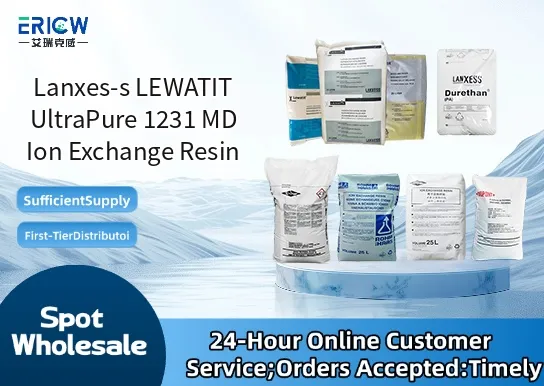
Ultra-low extractables profile specifically engineered for pharmaceutical and bioprocessing water systems requiring ultra-high purity.
Highly uniform spherical beads with narrow particle size distribution (PSD) ensuring consistent hydraulic performance and minimal pressure drop.
Exceptional chemical and osmotic stability in repeated regeneration cycles with strong acid (HCl) and strong base (NaOH) solutions.
Manufactured under ISO 9001-certified cleanroom conditions with full traceability and documented lot-specific quality certificates.
Compliant with USP <848>, EP 2.2.58, and FDA 21 CFR §173.25 for use in purified water and water-for-injection (WFI) polishing applications.
Final polishing of purified water (PW) and water-for-injection (WFI) in pharmaceutical manufacturing facilities.
Ultrapure water (UPW) treatment for semiconductor fabrication rinse processes.
Critical pretreatment and polishing in biopharmaceutical buffer preparation systems.
End-stage deionization in laboratory-grade water purification systems meeting ASTM Type I specifications.
Regulatory-compliant water reuse and recovery loops in GMP-compliant production environments.
| Chemical Type | Strong Acid Cation (SAC) Exchange Resin — Sulfonated polystyrene-divinylbenzene copolymer |
| Product Form | Moist, ready-to-use sodium form (Na⁺) |
| Appearance | Uniform amber spherical beads |
| Functional Group | Sulfonic acid (–SO₃H) |
| Ion Exchange Capacity (dry basis) | ≥ 4.8 meq/g |
| Moisture Content | 45–50% (w/w) |
| Particle Size Range | 300–1200 µm (≥ 95% retained between 300–1200 µm) |
| Uniformity Coefficient | ≤ 1.6 |
Q1: What is the primary application of LEWATIT UltraPure 1231 MD in pharmaceutical and biotech processes?
A: LEWATIT UltraPure 1231 MD is specifically designed for high-purity polishing applications in pharmaceutical water systems and buffer preparation, where ultra-low levels of ionic contaminants—including trace metals and organic ions—are critical to meet stringent quality requirements.
Q2: How does the "UltraPure" designation differ from standard LEWATIT ion exchange resins?
A: The UltraPure grade undergoes additional post-manufacturing purification and rigorous quality control to minimize extractables, particulates, and residual monomers—ensuring compatibility with GMP environments and reducing the risk of downstream contamination in sensitive applications.
Q3: Is LEWATIT UltraPure 1231 MD suitable for use in single-use systems or disposable bioprocessing equipment?
A: Yes—it is compatible with common single-use system materials and has been validated for low leachables under typical operating conditions, making it appropriate for integration into pre-packed cartridges and modular polishing units used in flexible manufacturing setups.
Q4: What regeneration protocols are recommended for maintaining performance consistency?
A: Standard regeneration uses dilute sodium hydroxide followed by deionized water rinsing; however, optimal frequency and chemical concentration should be determined based on feedwater quality and throughput—validation studies are advised prior to full-scale implementation.
Contact With Us:
E-mail: wangxingqiang@ericwchem.com
Have a Questions? Call Us:
Add:
Building A1, Jiete Industrial Park, Huangpu District, Guangzhou City, Guangdong Province, China