English
 Español
 tiếng việt
 русский
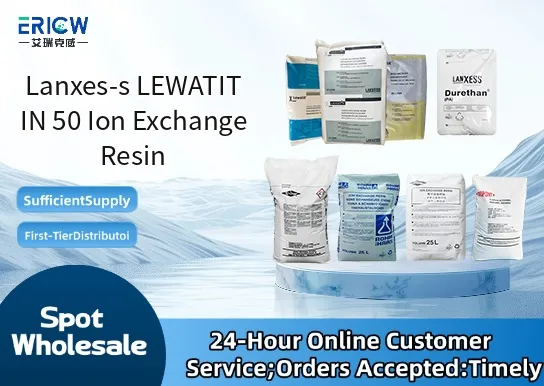
Highly selective strong acid cation exchanger based on sulfonated polystyrene-divinylbenzene matrix.
Optimized for high regeneration efficiency and low rinse water consumption in softening and demineralization cycles.
Excellent physical and chemical stability across wide pH (0–14) and temperature ranges (up to 120 °C).
Uniform spherical bead morphology ensures low pressure drop and consistent hydraulic performance in fixed-bed systems.
Low soluble organic matter (SOM) release, meeting stringent requirements for pharmaceutical and food-grade water polishing.
Industrial boiler feedwater softening and pre-treatment in power generation plants.
Pure water production for semiconductor manufacturing and microelectronics rinsing processes.
Pharmaceutical-grade purified water (PW) and water for injection (WFI) polishing in GMP-compliant facilities.
Food and beverage process water conditioning, including dairy, brewing, and bottled water production.
Catalyst support and metal recovery in hydrometallurgical applications requiring high selectivity for multivalent cations.
| Chemical Type | Strong Acid Cation (SAC), Gel-type, Sulfonated Polystyrene-DVB |
| Product Form | Moist, spherical beads (Na⁺ form supplied) |
| Appearance | Opaque amber to brown uniform spheres |
| Particle Size Range | 0.3–1.2 mm (≥95% retained between 0.4 and 1.0 mm) |
| Moisture Content | 47–53% (as shipped) |
| Ion Exchange Capacity (Total) | ≥2.0 eq/L (dry resin), ≥1.0 eq/L (as shipped) |
| Maximum Operating Temperature | 120 °C |
| pH Stability Range | 0–14 |
Q1: What is the primary functional group and ionic form of LANXESS LEWATIT IN 50?
A: LEWATIT IN 50 is a strongly acidic cation exchange resin based on a styrene-divinylbenzene matrix, functionalized with sulfonic acid groups. It is supplied in the sodium (Na⁺) form, making it suitable for softening and general cation removal applications.
Q2: Is LEWATIT IN 50 suitable for potable water treatment?
A: Yes — LEWATIT IN 50 is commonly used in drinking water softening systems and meets relevant global regulatory requirements for indirect food contact when operated and regenerated according to standard industrial practices. Final compliance depends on system design, regeneration protocol, and local regulatory validation.
Q3: How does LEWATIT IN 50 compare to other strong-acid cation resins in terms of physical stability and pressure drop?
A: LEWATIT IN 50 features a uniform spherical bead structure with high mechanical strength and low friability, supporting reliable long-term operation in both fixed-bed and moving-bed configurations. Its optimized particle size distribution helps maintain low and stable pressure drop across typical service flow rates.
Q4: Can LEWATIT IN 50 be used for selective removal of heavy metal ions from industrial effluents?
A: While primarily designed for calcium and magnesium removal in softening, LEWATIT IN 50 exhibits affinity for multivalent cations including heavy metals such as copper, nickel, and zinc — especially under controlled pH and competing ion conditions. For targeted heavy metal recovery or stringent discharge limits, specialized chelating or iminodiacetate resins are typically preferred.
Contact With Us:
E-mail: wangxingqiang@ericwchem.com
Have a Questions? Call Us:
Add:
Building A1, Jiete Industrial Park, Huangpu District, Guangzhou City, Guangdong Province, China