English
 Español
 tiếng việt
 русский
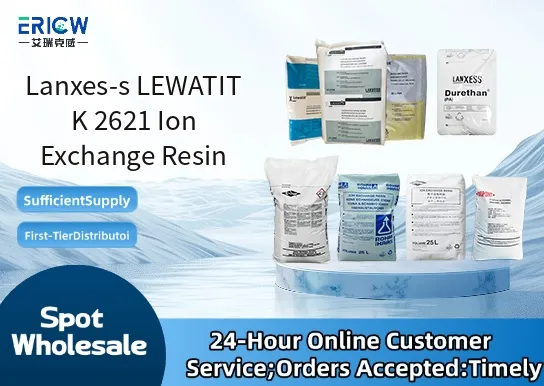
Highly selective for potassium (K⁺) and ammonium (NH₄⁺) ions in complex aqueous matrices.
Stable macroporous acrylic matrix ensures excellent physical durability and resistance to osmotic shock.
Optimized kinetic performance for rapid ion exchange even at low concentrations and variable flow rates.
Low sodium leakage profile, supporting stringent effluent quality requirements in polishing applications.
Regenerable with standard brine solutions (e.g., NaCl or KCl), enabling cost-effective cyclic operation.
Ammonium removal from municipal and industrial wastewater prior to discharge or reuse.
Potassium recovery and concentration in food processing and fermentation effluents.
Polishing step in ultrapure water systems where trace K⁺/NH₄⁺ control is critical.
Pre-treatment for reverse osmosis units to prevent fouling by ammonium-derived scale precursors.
Specialty chemical manufacturing requiring selective cation separation without co-removal of calcium or magnesium.
| Chemical Type | Macroporous acrylic weak-acid cation exchanger |
| Product Form | Moist, spherical beads |
| Appearance | Opaque white to off-white beads |
| Functional Group | Carboxylic acid (–CH₂COOH) |
| Ion Form | Hydrogen (H⁺) form as supplied |
| Particle Size Range | 0.4 – 1.2 mm |
| Moisture Content | 45 – 55% (w/w) |
| Maximum Operating Temperature | 100 °C |
Q1: What is the primary functional group and ionic form of LEWATIT K 2621?
A: LEWATIT K 2621 is a strongly basic anion exchange resin featuring quaternary ammonium functional groups, supplied in the chloride (Cl⁻) ionic form. It is designed for efficient removal of anionic contaminants from aqueous streams.
Q2: In which types of industrial water treatment applications is this resin commonly deployed?
A: LEWATIT K 2621 is frequently used in demineralization systems, nitrate and sulfate removal from potable and process water, and polishing steps in ultrapure water production—particularly where high selectivity for multivalent anions and stable performance under variable feed conditions are required.
Q3: How does LEWATIT K 2621 differ from conventional gel-type strong base anion resins?
A: Unlike standard gel-type resins, LEWATIT K 2621 features a macroporous matrix that provides enhanced physical stability, superior resistance to organic fouling, and consistent performance across a broader pH and temperature range—making it especially suitable for challenging feed waters with elevated organic or suspended solids content.
Q4: Is this resin suitable for food-grade or pharmaceutical water purification?
A: Yes—LEWATIT K 2621 is manufactured and tested to meet relevant global requirements for use in water purification systems serving food, beverage, and pharmaceutical applications, provided it is operated and regenerated in accordance with validated system protocols and regulatory expectations for ion exchange materials.
Contact With Us:
E-mail: wangxingqiang@ericwchem.com
Have a Questions? Call Us:
Add:
Building A1, Jiete Industrial Park, Huangpu District, Guangzhou City, Guangdong Province, China