English
 Español
 tiếng việt
 русский
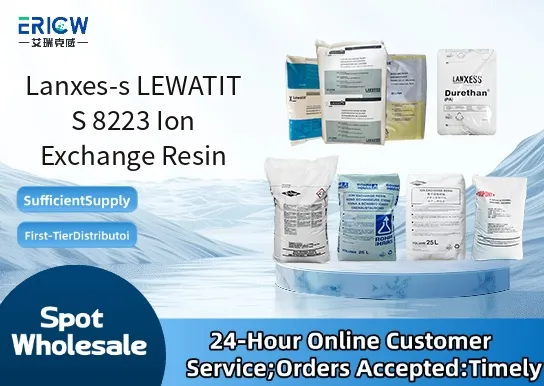
Highly selective for multivalent cations including calcium, magnesium, and heavy metals.
Exceptional chemical and osmotic stability under repeated regeneration cycles.
Optimized spherical bead morphology ensures low pressure drop and uniform flow distribution.
Low sodium leakage enables ultra-pure water production in critical polishing applications.
Sulfonic acid functional groups provide strong acidity and high exchange capacity.
Ultrapure water (UPW) systems for semiconductor manufacturing.
Final polishing stage in pharmaceutical-grade purified water (PW) and water-for-injection (WFI) systems.
Removal of hardness ions and trace metal contaminants in power plant boiler feedwater.
Cation exchange polishing in laboratory and analytical water purification units.
Pre-treatment for reverse osmosis (RO) and electrodeionization (EDI) systems requiring low ion breakthrough.
| Chemical Type | Strong Acid Cation (SAC), sulfonated polystyrene-divinylbenzene copolymer |
| Product Form | Moist, spherical beads |
| Appearance | Opaque amber to light brown beads |
| Functional Group | –SO₃H (sulfonic acid) |
| Ion Form | H⁺ form (ready-to-use) |
| Moisture Content | Approx. 48–52% (as shipped) |
| Particle Size Range | 0.3–1.2 mm (≥95% retained on 0.3 mm sieve) |
| Uniformity Coefficient | ≤1.6 |
Q1: What is the primary functional group and ionic form of LEWATIT S 8223?
A: LEWATIT S 8223 is a strongly acidic cation exchange resin based on a sulfonated polystyrene-divinylbenzene matrix, supplied in the sodium (Na⁺) form for general softening and selective metal removal applications.
Q2: Is LEWATIT S 8223 suitable for potable water treatment?
A: Yes — this resin is manufactured and tested to meet requirements for use in drinking water systems, including compliance with relevant global food-grade and drinking water safety guidelines when operated within validated process parameters.
Q3: How does LEWATIT S 8223 differ from standard softening resins like S 108 or M 500?
A: S 8223 features optimized physical stability and kinetic performance for demanding industrial applications, including higher resistance to osmotic shock and improved selectivity for multivalent cations such as calcium, magnesium, and heavy metals under variable flow and feedwater conditions.
Q4: What regeneration protocol is recommended for optimal performance?
A: Regeneration is typically performed using sodium chloride (NaCl) brine at standard concentrations and contact times; acid regeneration (e.g., HCl or H₂SO₄) may be used selectively for full hydrogen-form conversion or deep cleaning, depending on system design and operational goals.
Q5: Can LEWATIT S 8223 be used in mixed-bed configurations?
A: Yes — it is compatible with strong base anion exchange resins in mixed-bed systems for high-purity water production, provided appropriate resin compatibility, backwash separation, and regeneration sequencing are implemented per system specifications.
Contact With Us:
E-mail: wangxingqiang@ericwchem.com
Have a Questions? Call Us:
Add:
Building A1, Jiete Industrial Park, Huangpu District, Guangzhou City, Guangdong Province, China