English
 Español
 tiếng việt
 русский
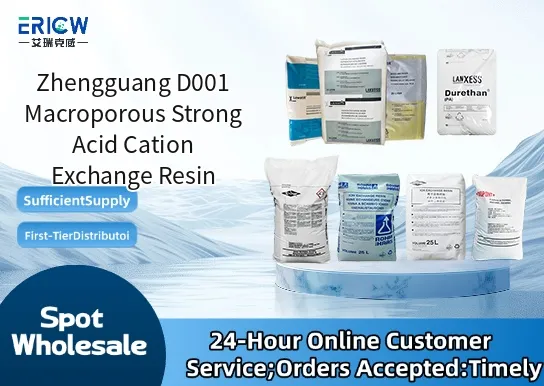
Macroporous structure ensures excellent physical stability and resistance to osmotic shock during repeated regeneration cycles.
Highly cross-linked polystyrene-divinylbenzene matrix provides superior mechanical strength and long service life in high-flow industrial systems.
Sulfonic acid functional groups deliver strong cation exchange capacity with consistent performance across wide pH ranges (0–14).
Low fines content (<0.2%) minimizes pressure drop and prevents column channeling in packed-bed applications.
Optimized particle size distribution (0.3–1.2 mm) ensures uniform hydraulic flow and maximizes mass transfer efficiency.
Softening of boiler feed water and process water in power generation and petrochemical plants.
Pretreatment for reverse osmosis (RO) and electrodeionization (EDI) systems to protect membranes from scaling ions.
Metal recovery and purification in hydrometallurgical processes, including copper, nickel, and cobalt leach solutions.
Catalytic support in esterification and hydrolysis reactions due to its robust acidic functionality and thermal stability.
Removal of heavy metal cations (e.g., Pb²⁺, Cd²⁺, Cr³⁺) from industrial wastewater prior to discharge or reuse.
| Chemical Type | Polystyrene-divinylbenzene copolymer with sulfonic acid groups |
| Product Form | Moist, spherical beads |
| Appearance | Amber to light brown, uniform spherical particles |
| Functional Group | –SO₃H (sulfonic acid) |
| Ion Exchange Capacity (dry basis) | ≥4.8 meq/g |
| Moisture Content | 45–50% (as shipped) |
| Particle Size Range | 0.3–1.2 mm (95% retained on 0.3 mm sieve, passing 1.2 mm sieve) |
| Uniformity Coefficient | ≤1.6 |
Q1: What is the primary structural advantage of the macroporous matrix in D001 compared to gel-type resins?
A: The macroporous structure provides high physical stability and uniform pore distribution, enabling consistent performance under variable flow rates, temperature fluctuations, and in solutions containing suspended solids or organic fouling agents — making it especially suitable for industrial water treatment and catalytic applications where mechanical robustness is critical.
Q2: Can Zhengguang D001 be used for demineralization of high-salinity feedwater?
A: Yes — its strong acid sulfonic functional groups and macroporous architecture allow effective cation removal even from feedwaters with elevated total dissolved solids (TDS), though optimal regeneration frequency and cycle capacity may vary depending on ionic composition and operating conditions.
Q3: How does D001 perform in acidic or oxidizing environments?
A: D001 exhibits good chemical resistance to common mineral acids and moderate oxidants under standard operating temperatures; however, prolonged exposure to strong oxidizers (e.g., chlorine above trace levels) or highly concentrated hot acids may accelerate functional group degradation — appropriate pretreatment and operational limits are recommended.
Q4: Is D001 suitable for food-grade or pharmaceutical water purification?
A: D001 is manufactured using raw materials compliant with general food-contact and pharmaceutical water processing guidelines; however, final regulatory approval depends on system validation, end-use application, and local compliance requirements — users should conduct extractables testing and consult relevant pharmacopoeial standards prior to implementation.
Contact With Us:
E-mail: wangxingqiang@ericwchem.com
Have a Questions? Call Us:
Add:
Building A1, Jiete Industrial Park, Huangpu District, Guangzhou City, Guangdong Province, China