English
 Español
 tiếng việt
 русский
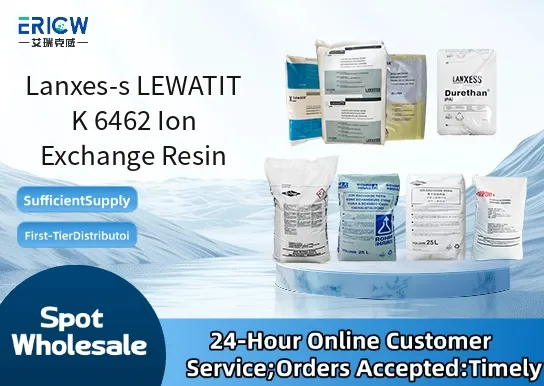
Highly selective for potassium (K⁺) and ammonium (NH₄⁺) ions in complex aqueous matrices.
Stable macroporous polystyrene-divinylbenzene matrix ensures excellent mechanical strength and pressure resistance.
Optimized particle size distribution (0.3–1.2 mm) enables low-pressure-drop operation in fixed-bed and column systems.
Chemically resistant to oxidants, acids, and bases within standard pH range (0–14), supporting robust regeneration cycles.
Low fines generation and high attrition resistance prolong service life and reduce system fouling.
Ammonium removal from municipal and industrial wastewater prior to discharge or reuse.
Potassium recovery and concentration in food processing effluents and fermentation broths.
Softening and selective ion removal in pharmaceutical water purification systems (PW/WW).
Nutrient recovery (K⁺/NH₄⁺) in agricultural runoff and anaerobic digester liquors.
Pre-treatment for reverse osmosis (RO) and electrodialysis reversal (EDR) to prevent scaling and membrane fouling.
| Chemical Type | Macroporous strong-acid cation exchange resin (sulfonated polystyrene-DVB) |
| Product Form | Moist, sodium-form beads ready for use |
| Appearance | Opaque amber spherical beads |
| Particle Size Range | 0.3–1.2 mm |
| Uniformity Coefficient | ≤ 1.8 |
| Moisture Content | 45–55% (as shipped) |
| Functional Capacity (Na⁺ form) | ≥ 1.8 eq/L (dry) |
| Maximum Operating Temperature | 120 °C |
Q1: What is the primary functional group and ionic form of LEWATIT K 6462?
A: LEWATIT K 6462 is a strongly acidic cation exchange resin based on a styrene-divinylbenzene matrix, functionalized with sulfonic acid groups. It is supplied in the sodium (Na⁺) form, enabling efficient removal of multivalent cations such as Ca²⁺, Mg²⁺, and heavy metal ions from aqueous streams.
Q2: Is LEWATIT K 6462 suitable for food-grade or pharmaceutical water treatment applications?
A: Yes — LEWATIT K 6462 is manufactured and tested to meet requirements for use in the production of purified water intended for pharmaceutical and food processing applications, provided it is operated within validated system parameters and regenerated according to established protocols. End-use compliance depends on full system qualification and regulatory oversight.
Q3: How does LEWATIT K 6462 differ from standard gel-type strong acid resins in terms of physical structure and performance?
A: LEWATIT K 6462 features a macroporous structure, offering enhanced mechanical stability, superior resistance to fouling by organic matter or suspended solids, and consistent performance across variable feedwater conditions — especially where high turbidity, oxidants, or temperature fluctuations are present.
Q4: What regeneration chemicals and typical conditions are recommended for LEWATIT K 6462?
A: The resin is efficiently regenerated using sodium chloride (NaCl) brine solutions. Regeneration efficiency depends on brine concentration, contact time, flow rate, and bed depth — best practices involve controlled downflow regeneration at ambient to moderately elevated temperatures, avoiding excessive acid or caustic exposure unless specifically required for special cleaning procedures.
Contact With Us:
E-mail: wangxingqiang@ericwchem.com
Have a Questions? Call Us:
Add:
Building A1, Jiete Industrial Park, Huangpu District, Guangzhou City, Guangdong Province, China