English
 Español
 tiếng việt
 русский
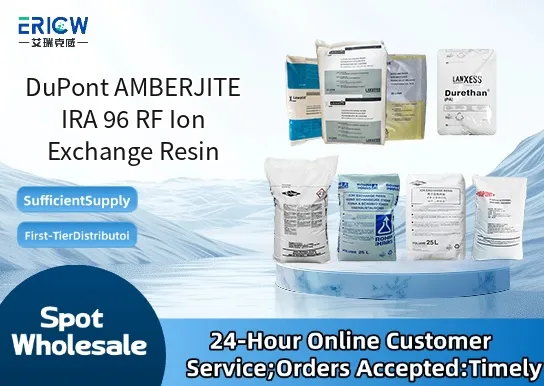
Highly selective for nitrate (NO₃⁻) and perchlorate (ClO₄⁻) removal from water.
Functionalized with tertiary amine groups on a macroporous polystyrene-divinylbenzene matrix.
Exceptional physical and chemical stability under repeated regeneration cycles.
Low pressure drop and high flow rate capability due to uniform spherical bead morphology.
Regenerable with sodium chloride (NaCl), enabling cost-effective, closed-loop operation.
Drinking water treatment for nitrate and perchlorate compliance.
Groundwater remediation at contaminated industrial or military sites.
Pre-treatment for reverse osmosis systems to protect membranes from oxidant-sensitive anions.
Municipal water utility polishing applications targeting emerging contaminants.
| Chemical Type | Strong Base Anion Exchange Resin (Type I, Tertiary Amine) |
| Product Form | Moist, spherical beads |
| Appearance | Off-white to light yellow, uniform spheres |
| Matrix Structure | Macroporous polystyrene-divinylbenzene (PS-DVB) |
| Functional Group | N(CH₃)₂ (dimethylamino) |
| Ionic Form | Chloride (Cl⁻) |
| Moisture Content | 48–55% (as shipped) |
| Particle Size Range | 0.3–1.2 mm (US Sieve #16–#60) |
Q1: What is the primary functional group and ion exchange capacity of AMBERJET IRA 96 RF?
A: AMBERJET IRA 96 RF is a strongly basic, Type I anion exchange resin with quaternary ammonium functional groups. It exhibits high total exchange capacity and excellent selectivity for nitrate, sulfate, and other multivalent anions, particularly in low-salinity water matrices.
Q2: How does AMBERJET IRA 96 RF differ from standard IRA 96 resin?
A: The “RF” designation indicates a specially formulated, fine-mesh, reagent-grade version optimized for high-purity applications—such as pharmaceutical water polishing or ultrapure rinse water treatment—where low extractables, minimal fines generation, and consistent regeneration performance are critical.
Q3: Is AMBERJET IRA 96 RF suitable for food-contact or pharmaceutical water systems?
A: Yes—AMBERJET IRA 96 RF is manufactured and tested to meet requirements for use in purified water and water-for-injection (WFI) systems. It complies with relevant USP <731> and EP 2.2.41 resin specifications when installed and operated per DuPont’s validated protocols.
Q4: What regeneration chemicals and typical conditions are recommended?
A: Sodium hydroxide (NaOH) is the standard regenerant, typically applied at concentrations between 2% and 4% w/w. Regeneration efficiency is enhanced by controlled flow rates, adequate contact time, and proper rinsing—specific parameters depend on system design and service cycle history.
Contact With Us:
E-mail: wangxingqiang@ericwchem.com
Have a Questions? Call Us:
Add:
Building A1, Jiete Industrial Park, Huangpu District, Guangzhou City, Guangdong Province, China