English
 Español
 tiếng việt
 русский
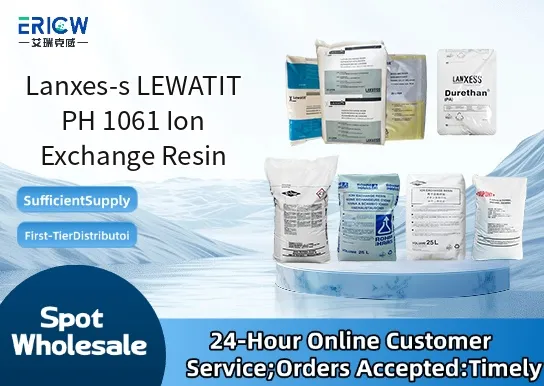
High-capacity macroporous weakly acidic cation exchange resin based on polyacrylic matrix.
Exceptional kinetic performance and fast regeneration response due to optimized pore structure.
Superior chemical and mechanical stability across wide pH range (1–14) and elevated temperatures.
Low osmotic swelling behavior ensures consistent bed volume during service and regeneration cycles.
Designed for selective removal of divalent cations (e.g., Ca²⁺, Mg²⁺) while retaining monovalent ions in complex feed streams.
Pre-treatment softening in high-silica or high-alkalinity boiler feedwater systems.
Metal recovery and purification in hydrometallurgical processes (e.g., nickel, cobalt leach solutions).
Removal of hardness and heavy metals from industrial process wastewater prior to discharge or reuse.
Decalcification and pH stabilization in food-grade sugar and organic acid production streams.
Selective conditioning of electrolyte solutions in battery recycling and electroplating rinse water treatment.
| Chemical Type | Weakly acidic acrylic cation exchanger (carboxylic functional group) |
| Product Form | Moist spherical beads |
| Appearance | Opaque white to light yellow beads |
| Functional Group | –CH₂–CH(COOH)– |
| Matrix Structure | Macroporous acrylic copolymer |
| Ion Form | Hydrogen form (H⁺) |
| Particle Size Range | 0.3–1.2 mm (≥95% retained on 0.3 mm sieve) |
| Moisture Content | 45–55% (as shipped) |
Q1: What is the primary functional group and ion exchange mechanism of LEWATIT PH 1061?
A: LEWATIT PH 1061 is a strongly acidic cation exchange resin based on a styrene-divinylbenzene matrix with sulfonic acid functional groups. It operates via reversible proton (H⁺) exchange, effectively removing multivalent cations such as Ca²⁺, Mg²⁺, Fe³⁺, and heavy metal ions from aqueous streams.
Q2: Is LEWATIT PH 1061 suitable for use in food-grade or pharmaceutical water purification systems?
A: Yes — LEWATIT PH 1061 is manufactured and tested to meet requirements for use in water treatment applications where compliance with relevant food-contact and pharmaceutical water quality standards is required. Users must validate final system performance and confirm suitability under their specific regulatory and operational conditions.
Q3: How does LEWATIT PH 1061 compare to standard gel-type cation resins in terms of physical stability and regeneration efficiency?
A: As a macroporous resin, LEWATIT PH 1061 offers enhanced mechanical and osmotic stability compared to conventional gel-type resins, particularly under frequent cycling or in solutions containing suspended solids or organic foulants. Its structure also supports efficient regeneration with mineral acids across a broad pH range, maintaining consistent capacity over extended service life.
Q4: Can LEWATIT PH 1061 be used for selective removal of transition metals from industrial process streams?
A: Yes — its high affinity for polyvalent cations, combined with macroporous accessibility, makes it effective for selective removal of transition metals (e.g., Cu²⁺, Ni²⁺, Zn²⁺) from complex effluents, including those with moderate organic content or variable ionic strength. Performance depends on feed composition, pH, and competing ions.
Contact With Us:
E-mail: wangxingqiang@ericwchem.com
Have a Questions? Call Us:
Add:
Building A1, Jiete Industrial Park, Huangpu District, Guangzhou City, Guangdong Province, China