English
 Español
 tiếng việt
 русский
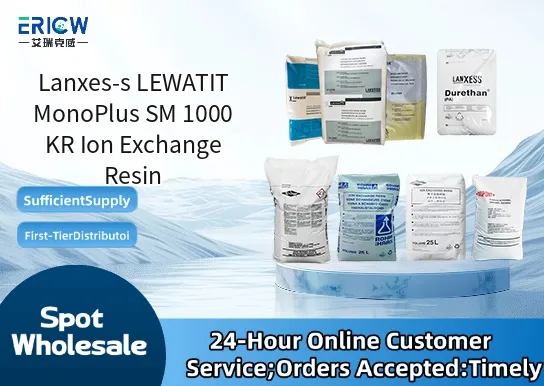
Highly uniform spherical beads ensure consistent hydraulic performance and low pressure drop across service cycles.
Optimized for potassium-selective removal with superior affinity for K⁺ ions in mixed-cation environments.
Enhanced chemical stability in acidic, neutral, and mildly alkaline conditions supports extended operational lifetime.
Low osmotic swelling behavior minimizes mechanical stress during repeated regeneration cycles.
Manufactured under strict ISO-certified quality control to guarantee batch-to-batch reproducibility and regulatory compliance.
Pharmaceutical water systems requiring precise potassium control in purified water (PW) and water for injection (WFI) polishing.
Food & beverage processing where selective potassium reduction is critical for product stability and taste profile.
Nuclear power plant secondary coolant treatment to minimize radioactive potassium-40 buildup in steam cycle systems.
Specialty chemical synthesis workflows demanding ultra-low residual K⁺ contamination in high-purity reagent streams.
Electronics-grade ultrapure water (UPW) production for semiconductor manufacturing rinse processes.
| Chemical Type | Strong acid cation exchange resin (sulfonic acid functionalized polystyrene-divinylbenzene matrix) |
| Product Form | Moist, spherical beads |
| Appearance | Opaque amber to light brown beads |
| Primary Applications | Potassium-selective removal and trace alkali metal ion control |
| Key Features | Potassium-selective, high capacity, low sodium leakage, excellent physical stability |
| Ion Form | Hydrogen form (H⁺) as supplied |
| Particle Size Range | 0.3–1.2 mm (95% of beads) |
| Maximum Operating Temperature | 120 °C |
Q1: What is the primary functional group and ionic form of LEWATIT MonoPlus SM 1000 KR?
A: LEWATIT MonoPlus SM 1000 KR is a strongly acidic cation exchange resin in the potassium (K⁺) form, featuring sulfonic acid functional groups bound to a highly crosslinked polystyrene-divinylbenzene matrix.
Q2: How does SM 1000 KR differ from standard sodium-form cation resins in process applications?
A: Operating in the potassium form provides higher selectivity for certain multivalent cations and reduces sodium leaching—making it especially suitable for applications where low sodium content or controlled ionic profiles are critical, such as in pharmaceutical water polishing or specialty chemical synthesis.
Q3: Is this resin compatible with high-temperature or low-pH service conditions?
A: SM 1000 KR exhibits good thermal stability up to approximately 120 °C and maintains structural integrity under moderately acidic conditions (pH ≥ 2), though prolonged exposure to extreme pH or oxidizing agents may accelerate degradation and should be evaluated case by case.
Q4: What regeneration protocol is recommended for optimal performance recovery?
A: Regeneration is typically performed using concentrated potassium chloride (KCl) solution; alternative regenerants like potassium hydroxide (KOH) may be used depending on the target ionic form and application requirements. Flow rate, concentration, and contact time should be optimized based on system design and loading history.
Contact With Us:
E-mail: wangxingqiang@ericwchem.com
Have a Questions? Call Us:
Add:
Building A1, Jiete Industrial Park, Huangpu District, Guangzhou City, Guangdong Province, China