English
 Español
 tiếng việt
 русский
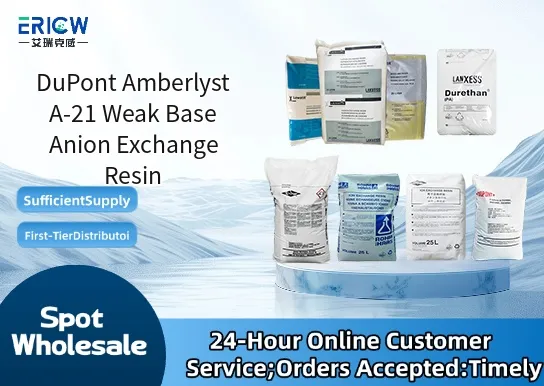
High functional group density for superior anion removal capacity in weakly acidic and neutral conditions.
Excellent chemical stability in alkaline environments, enabling robust performance during caustic regeneration.
Fast kinetics and low pressure drop due to uniform macroporous bead structure and optimized particle size distribution.
Low soluble organic extractables, meeting stringent purity requirements for pharmaceutical and fine chemical applications.
Thermally stable up to 100°C, supporting operation in elevated temperature process streams.
Removal of organic acids (e.g., acetic, citric, oxalic) from process streams in biotechnology and fermentation broths.
Decolorization and purification of sugar syrups and starch hydrolysates in food and beverage manufacturing.
Recovery and concentration of carboxylic acids in downstream processing of bio-based chemicals.
Pretreatment of feedwater for mixed-bed polishing systems to protect strong base resins from organic fouling.
Neutralization and capture of acidic contaminants in pharmaceutical intermediate synthesis and purification.
| Chemical Type | Weak base acrylic anion exchange resin with tertiary amine functional groups |
| Product Form | Moist, spherical beads |
| Appearance | Off-white to light yellow, translucent beads |
| Functional Capacity (Cl⁻ form, dry basis) | ≥ 4.8 eq/L (≥ 4.2 meq/mL) |
| Particle Size Range | 0.3–1.2 mm |
| Uniformity Coefficient | ≤ 1.6 |
| Moisture Content | 45–55% (as shipped) |
| pH Stability Range | 0–14 (short-term exposure to pH >14 not recommended) |
Q1: What types of anions does Amberlyst A-21 effectively remove or exchange?
A: Amberlyst A-21 is a weak base anion exchange resin with tertiary amine functional groups, making it particularly effective for removing strong acid anions such as chloride, sulfate, nitrate, and bicarbonate from aqueous streams. It exhibits limited affinity for weakly ionized species like silicate or organic acids in their non-dissociated form.
Q2: How does Amberlyst A-21 differ from strong base anion resins in terms of regeneration and chemical stability?
A: Unlike strong base resins, Amberlyst A-21 can be efficiently regenerated using mild alkaline solutions—such as dilute sodium hydroxide or even ammonia—and does not require highly caustic conditions. Its weak base nature also provides greater resistance to oxidative degradation, especially in feedwaters containing oxidants like chlorine or chloramines.
Q3: In which industrial applications is Amberlyst A-21 most commonly deployed?
A: Amberlyst A-21 is widely used in water demineralization systems—especially as a polishing step following strong acid cation resins—wastewater treatment for acid recovery, pharmaceutical process water purification, and catalytic applications where controlled basicity is beneficial. It is also selected for dealkalization and nitrate removal where high selectivity for strong acids is required.
Q4: Can Amberlyst A-21 be used in the presence of organic contaminants or fouling-prone feedwaters?
A: Amberlyst A-21 demonstrates relatively good tolerance to organic fouling compared to strong base resins, owing to its lower swelling tendency and absence of permanent quaternary ammonium groups. However, pretreatment—such as activated carbon filtration or microfiltration—is still recommended for feedstreams with significant dissolved organics or suspended solids to maintain long-term performance and capacity.
Contact With Us:
E-mail: wangxingqiang@ericwchem.com
Have a Questions? Call Us:
Add:
Building A1, Jiete Industrial Park, Huangpu District, Guangzhou City, Guangdong Province, China