English
 Español
 tiếng việt
 русский
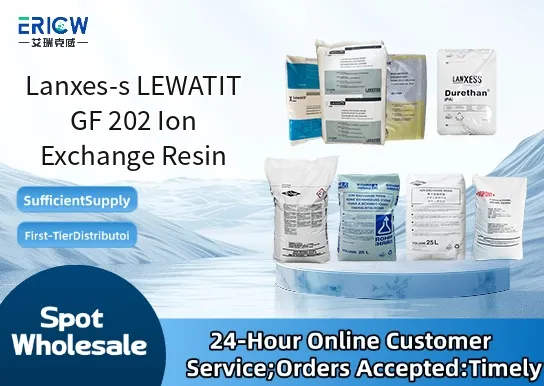
Highly selective for multivalent cations including calcium, magnesium, and heavy metals.
Exceptional physical and chemical stability in demanding industrial water treatment environments.
Low pressure drop and high flow capacity due to uniform spherical bead morphology.
Optimized for regeneration efficiency with reduced acid and salt consumption.
Compliant with global food-grade and potable water standards (e.g., NSF/ANSI 61).
Softening of boiler feedwater in power generation plants.
Removal of hardness ions in pharmaceutical process water systems.
Pretreatment for reverse osmosis (RO) and electrodeionization (EDI) systems.
Heavy metal recovery and wastewater polishing in electroplating facilities.
Production of ultra-pure water for semiconductor manufacturing.
| Chemical Type | Strong acid cation exchange resin (sulfonated polystyrene-divinylbenzene matrix) |
| Product Form | Moist, spherical beads |
| Appearance | Opaque amber to brown beads |
| Functional Group | Sulfonic acid (–SO₃H) |
| Ion Form | Na⁺ form (standard supply) |
| Particle Size Range | 0.3–1.2 mm |
| Moisture Content | 45–50% (w/w) |
| Temperature Limit | Max. 120 °C (short-term), 100 °C (continuous) |
Q1: What is the primary functional group and ionic form of LEWATIT GF 202?
A: LEWATIT GF 202 is a strongly acidic cation exchange resin based on a sulfonated polystyrene-divinylbenzene matrix, supplied in the sodium (Na⁺) form for general-purpose softening and ion removal applications.
Q2: Is LEWATIT GF 202 suitable for use in food-grade or pharmaceutical water treatment systems?
A: Yes — LEWATIT GF 202 is manufactured and tested to meet requirements for use in the production of potable water and process water in food and pharmaceutical applications, provided it is properly regenerated and rinsed according to standard operating procedures.
Q3: How does GF 202 compare to standard gel-type strong acid cation resins in terms of physical stability and fouling resistance?
A: GF 202 features a specially engineered macroreticular structure that enhances mechanical strength and improves resistance to organic fouling and osmotic shock compared to conventional gel-type resins, making it particularly robust in variable feedwater quality conditions.
Q4: What regeneration chemicals and typical dosage ranges are recommended for LEWATIT GF 202?
A: Sodium chloride (NaCl) is the standard regenerant; dosage typically ranges from 100–150 g/L of resin depending on service cycle and loading. Acid regeneration (e.g., HCl or H₂SO₄) is also possible when hydrogen-form operation is required, with concentration and volume adjusted per system design and water chemistry.
Contact With Us:
E-mail: wangxingqiang@ericwchem.com
Have a Questions? Call Us:
Add:
Building A1, Jiete Industrial Park, Huangpu District, Guangzhou City, Guangdong Province, China