English
 Español
 tiếng việt
 русский
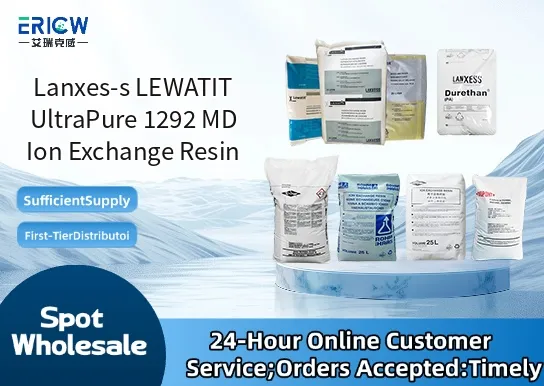
Ultra-low extractables profile specifically validated for pharmaceutical-grade water purification.
Highly uniform spherical bead morphology ensuring consistent hydraulic performance and minimal pressure drop.
Optimized for mixed-bed operation with exceptional chemical stability in both acidic and alkaline regeneration cycles.
Complies with USP <846>, EP 2.2.58, and JP XVII standards for purified water systems.
Pre-compacted and pre-rinsed to minimize initial rinse requirements and accelerate system commissioning.
Final polishing stage in pharmaceutical purified water (PW) and water for injection (WFI) generation systems.
Critical deionization in biotechnology process water loops requiring ultra-low TOC and conductivity.
Ultrapure water production for semiconductor manufacturing rinse applications.
Regulatory-compliant water treatment in clinical research and cell therapy cleanroom utilities.
High-integrity polishing for laboratory-grade ultrapure water systems (Type I, ASTM D1193).
| Chemical Type | Strong acid cation (H⁺ form) / strong base anion (OH⁻ form) mixed bed |
| Product Form | Uniform spherical beads, pre-mixed 1:1 volume ratio |
| Appearance | Opaque white (cation) and translucent amber (anion) beads, visually distinct |
| Primary Applications | Pharmaceutical water polishing, biotech process water, semiconductor UPW |
| Key Features | Low TOC leachables, low sodium leakage, high regeneration efficiency |
| Benefits | Reduced validation burden, extended service cycle, minimized microbial growth risk |
| Storage Conditions | Store dry at 5–40 °C; avoid freezing and direct sunlight |
| Regeneration Compatibility | Compatible with standard NaOH/HCl regenerants; optimized for low-concentration protocols |
Q1: What is the primary application of LEWATIT UltraPure 1292 MD in pharmaceutical and biotech processes?
A: LEWATIT UltraPure 1292 MD is specifically designed for final polishing steps in high-purity water systems used in pharmaceutical manufacturing, including WFI (Water for Injection) and purified water loops, where ultra-low ionic contamination and minimal organic leachables are critical.
Q2: How does the "UltraPure" designation differ from standard LEWATIT resins?
A: The UltraPure grade undergoes additional post-manufacturing purification and stringent quality control to significantly reduce residual monomers, oligomers, and ionic impurities—ensuring compliance with pharmacopeial requirements for low conductivity and low total organic carbon (TOC) release in ultrapure water applications.
Q3: Is LEWATIT UltraPure 1292 MD suitable for use in single-use or disposable fluid processing systems?
A: Yes—it is compatible with pre-packed, sterile-filtered cartridges and single-use ion exchange modules commonly deployed in bioprocessing skids, provided the system design supports its specified flow rates, pressure limits, and regeneration protocols.
Q4: What regeneration chemicals are recommended for maintaining performance over multiple cycles?
A: Standard regeneration uses dilute sodium hydroxide (NaOH) for anion exchange functionality and dilute hydrochloric acid (HCl) for cation exchange sites. Final rinsing must be performed with ultrapure water until effluent conductivity and TOC meet process specifications.
Contact With Us:
E-mail: wangxingqiang@ericwchem.com
Have a Questions? Call Us:
Add:
Building A1, Jiete Industrial Park, Huangpu District, Guangzhou City, Guangdong Province, China