English
 Español
 tiếng việt
 русский
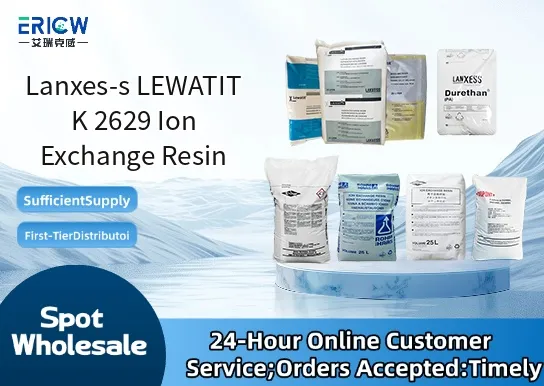
Highly selective for potassium (K⁺) and ammonium (NH₄⁺) ions in complex aqueous matrices.
Stable macroporous polystyrene-divinylbenzene matrix ensures robust performance under varying pH and temperature conditions.
Optimized particle size distribution (0.3–1.2 mm) enables low pressure drop and uniform flow distribution in column operation.
Excellent chemical resistance to oxidants, chlorine, and moderate concentrations of acids and alkalis.
Regenerable with standard salt solutions (e.g., NaCl), supporting sustainable cyclic operation and reduced operational costs.
Removal of ammonium from municipal and industrial wastewater prior to discharge or reuse.
Potassium recovery and concentration in food processing effluents and biogas digestate streams.
Pre-treatment for ultrapure water systems where selective monovalent cation control is required.
Softening and selective ion removal in pharmaceutical process water circuits.
Nutrient management in aquaculture and hydroponic recirculating systems.
| Chemical Type | Macroporous strong-acid cation exchange resin (sulfonic acid functionalized) |
| Product Form | Moist, spherical beads |
| Appearance | Opaque amber to brown beads |
| Functional Group | –SO₃H (sulfonic acid) |
| Matrix Structure | Polystyrene-divinylbenzene (crosslinked with ~8% DVB) |
| Ion Form | H⁺ form (ready for conversion to Na⁺, K⁺, or NH₄⁺ as needed) |
| Moisture Content | 45–55% (w/w) |
| Uniformity Coefficient | ≤1.6 |
Q1: What is the primary functional group and ionic form of LEWATIT K 2629?
A: LEWATIT K 2629 is a strongly basic anion exchange resin with quaternary ammonium functional groups, supplied in the chloride (Cl⁻) ionic form.
Q2: Is LEWATIT K 2629 suitable for demineralization of process water in pharmaceutical or food-grade applications?
A: Yes — it is commonly used in high-purity water systems requiring low conductivity and minimal organic leachables. Its high chemical stability and low swelling characteristics support consistent performance in multi-step ion exchange trains, though final suitability depends on system validation and regulatory compliance of the full process.
Q3: How does LEWATIT K 2629 compare to standard Type I or Type II strong base anion resins in terms of selectivity and regeneration efficiency?
A: K 2629 features a macroporous polystyrene matrix with optimized crosslinking, offering enhanced selectivity for multivalent anions (e.g., sulfate, nitrate) and improved resistance to fouling from organic matter. It typically demonstrates higher regeneration efficiency with sodium chloride compared to gel-type counterparts, especially under variable flow or temperature conditions.
Q4: Can LEWATIT K 2629 be used in mixed-bed configurations with cation resins?
A: Yes — it is fully compatible with standard strong acid cation resins (e.g., sulfonated polystyrene types) in mixed-bed units for ultrapure water production. Its uniform particle size and density profile support effective bed separation during backwash, minimizing cross-contamination risks.
Contact With Us:
E-mail: wangxingqiang@ericwchem.com
Have a Questions? Call Us:
Add:
Building A1, Jiete Industrial Park, Huangpu District, Guangzhou City, Guangdong Province, China