English
 Español
 tiếng việt
 русский
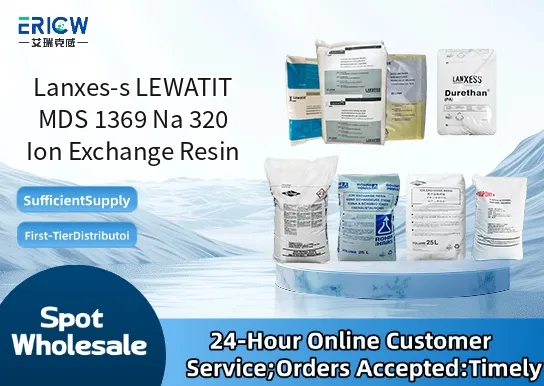
Highly uniform spherical bead structure ensuring consistent hydraulic performance and low pressure drop.
Optimized for high selectivity and capacity in sodium-form cation exchange applications.
Excellent physical and chemical stability across a wide pH range (0–14) and operating temperatures up to 120 °C.
Low fines generation and superior abrasion resistance, supporting long service life and reduced bed compaction.
Regenerable with standard sodium chloride solutions, enabling efficient and cost-effective cycle operation.
Softening of industrial process water and boiler feedwater in power generation plants.
Pretreatment for reverse osmosis (RO) systems in pharmaceutical and electronics-grade water production.
Metal finishing rinse water treatment for sodium ion recovery and hardness control.
Food & beverage processing water conditioning to meet strict regulatory purity requirements.
Chemical manufacturing process streams requiring precise cation removal and pH stabilization.
| Chemical Type | Sulfonated polystyrene-divinylbenzene copolymer (strong acid cation) |
| Product Form | Sodium form (Na⁺) |
| Appearance | Uniform amber spherical beads |
| Moisture Content | 48–52% (as shipped) |
| Particle Size Range | 0.4–1.2 mm |
| Uniformity Coefficient | ≤1.6 |
| Exchange Capacity (min.) | 1.8 mmol/mL (wet volume) |
| Maximum Operating Temperature | 120 °C |
Q1: What is the primary functional form of LEWATIT MDS 1369 Na 320?
A: LEWATIT MDS 1369 Na 320 is supplied in the sodium (Na⁺) form and is designed as a strongly acidic cation exchange resin based on a sulfonated polystyrene-divinylbenzene matrix. It is optimized for high-capacity, selective removal of multivalent cations in demanding water treatment applications.
Q2: How does MDS 1369 Na 320 differ from standard gel-type cation resins?
A: Unlike conventional gel-type resins, MDS 1369 Na 320 features a macroporous structure that provides superior kinetic performance, enhanced resistance to organic fouling, and stable operation across variable pH and temperature conditions — making it especially suitable for pretreatment of challenging feedwaters containing oxidants or natural organic matter.
Q3: Can this resin be used in food-grade or pharmaceutical water systems?
A: Yes — LEWATIT MDS 1369 Na 320 is manufactured and tested in compliance with relevant global pharmacopoeial requirements for ion exchange resins used in purified water production. It is widely applied in WFI (Water for Injection) and PW (Purified Water) loop regeneration where high chemical stability and low extractables are critical.
Q4: What regeneration chemicals and typical conditions are recommended?
A: Sodium chloride (NaCl) brine is the standard regenerant. Regeneration efficiency is optimized using controlled flow rates and contact times; typical brine concentrations range between 8–12% w/w, with dosage adjusted based on service cycle exhaustion and system design parameters.
Contact With Us:
E-mail: wangxingqiang@ericwchem.com
Have a Questions? Call Us:
Add:
Building A1, Jiete Industrial Park, Huangpu District, Guangzhou City, Guangdong Province, China