English
 Español
 tiếng việt
 русский
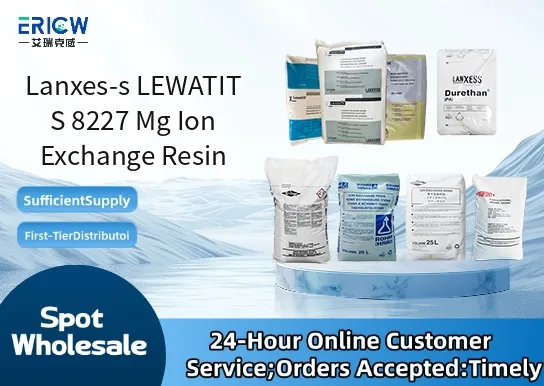
Highly selective for magnesium (Mg²⁺) removal and recovery in complex aqueous matrices.
Stable polystyrene-divinylbenzene matrix with uniform spherical beads for consistent hydraulic performance.
Optimized functionalization with sulfonic acid groups enabling strong cation exchange capacity at neutral to slightly acidic pH.
Excellent chemical and osmotic stability, resistant to fouling from organic matter and suspended solids.
Regenerable with standard sodium chloride (NaCl) brine, supporting sustainable operational cycles.
Removal of magnesium ions from industrial process water prior to reverse osmosis or evaporation stages.
Mg²⁺ polishing in pharmaceutical-grade purified water systems compliant with USP/EP standards.
Recovery of magnesium from mining leachates and seawater desalination brines.
Softening of boiler feedwater where precise Mg²⁺ control is critical to prevent scale formation.
Pre-treatment for lithium extraction processes to selectively separate Mg²⁺ from Li⁺ streams.
| Chemical Type | Sulfonated polystyrene-divinylbenzene cation exchange resin |
| Product Form | Moist, spherical beads |
| Appearance | Off-white to light amber, translucent beads |
| Functional Group | Sulfonic acid (–SO₃H) |
| Ion Form | Sodium form (Na⁺) |
| Particle Size Range | 0.3–1.2 mm |
| Moisture Content | 45–50 % (w/w) |
| Exchange Capacity (min.) | 1.8 meq/mL (wet volume) |
Q1: What is the primary functional mechanism of LEWATIT S 8227 in water treatment applications?
A: LEWATIT S 8227 is a strongly acidic cation exchange resin in the magnesium form, designed to selectively remove multivalent cations—particularly calcium and heavy metals—from aqueous streams via reversible ion exchange. The pre-loaded Mg²⁺ ions are exchanged for target contaminants, enabling softening and selective metal recovery without introducing sodium or other counter-ions that may interfere with downstream processes.
Q2: How does the magnesium form of this resin differ from the more common sodium or hydrogen forms?
A: Unlike Na⁺- or H⁺-form resins, the Mg²⁺ form provides controlled release of magnesium during regeneration—avoiding pH swings or sodium accumulation in sensitive applications such as pharmaceutical water systems, food-grade process water, or magnesium-supplemented irrigation solutions. It also offers improved selectivity for divalent over monovalent ions compared to Na⁺-form equivalents.
Q3: Can LEWATIT S 8227 be regenerated, and what are typical regeneration considerations?
A: Yes, the resin is fully regenerable using magnesium salt solutions—commonly MgCl₂ or MgSO₄—under controlled concentration and flow conditions. Regeneration efficiency depends on feed water composition, operating capacity utilization, and avoidance of fouling by organic matter or suspended solids. Pre-filtration and periodic cleaning protocols are recommended to maintain long-term performance.
Q4: Is LEWATIT S 8227 suitable for use in food, beverage, or pharmaceutical processing water systems?
A: Yes, it is widely applied in hygienic water treatment for these industries due to its non-sodium chemistry, low leachability of functional groups under validated operating conditions, and compatibility with sanitary system design. Users should confirm compliance with applicable local regulatory requirements and perform system-specific validation, including rinse protocols and residual magnesium monitoring.
Contact With Us:
E-mail: wangxingqiang@ericwchem.com
Have a Questions? Call Us:
Add:
Building A1, Jiete Industrial Park, Huangpu District, Guangzhou City, Guangdong Province, China