English
 Español
 tiếng việt
 русский
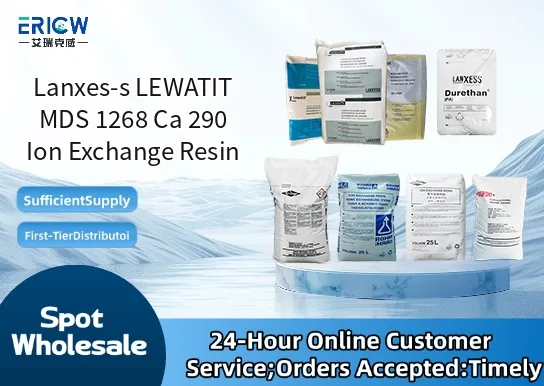
High-capacity calcium-selective strong acid cation exchange resin optimized for hardness removal.
Uniform spherical bead morphology ensuring low pressure drop and excellent hydraulic performance.
Superior chemical and thermal stability with resistance to oxidation and osmotic shock.
Regenerable with standard sodium chloride brine, enabling cost-effective and sustainable operation.
Low soluble organic carbon (SOC) release, meeting stringent requirements for potable water and food-grade applications.
Drinking water softening in municipal and decentralized treatment systems.
Pre-treatment for reverse osmosis and nanofiltration membrane protection.
Food and beverage processing, including dairy, brewing, and bottled water production.
Pharmaceutical-grade water purification requiring low extractables and high reliability.
Industrial boiler feedwater conditioning to prevent scale formation and extend equipment life.
| Chemical Type | Polystyrene-based sulfonated strong acid cation exchange resin |
| Product Form | Moist, spherical beads |
| Appearance | Opaque beige to light brown beads |
| Functional Group | Sulfonic acid (–SO₃H) |
| Ionic Form | Calcium (Ca²⁺) form |
| Particle Size Range | 0.3–1.2 mm (95% retained on 20 mesh, passes 60 mesh) |
| Moisture Content | 45–50% (as shipped) |
| Exchange Capacity (min.) | 1.8 mmol/mL (Ca²⁺ form, wet volume basis) |
Q1: What is the primary functional form and intended use of LEWATIT MDS 1268 Ca 290?
A: LEWATIT MDS 1268 Ca 290 is a strongly acidic, macroporous cation exchange resin supplied in the calcium (Ca²⁺) form. It is specifically engineered for selective removal of multivalent cations—such as heavy metals or hardness ions—from aqueous streams in industrial process water treatment, metal finishing, and specialty chemical purification.
Q2: How does the macroporous structure benefit performance in challenging feed streams?
A: The macroporous matrix provides enhanced physical stability and resistance to fouling, allowing consistent ion exchange performance even in solutions with suspended solids, high organic content, or variable pH. This makes it particularly suitable for pretreated wastewater or process effluents where gel-type resins may degrade or experience reduced kinetics.
Q3: Can this resin be regenerated, and what are typical regeneration considerations?
A: Yes, LEWATIT MDS 1268 Ca 290 is fully regenerable using strong mineral acids such as hydrochloric or sulfuric acid. Regeneration efficiency depends on operating conditions—including flow rate, bed depth, and contaminant loading—but generally achieves high recovery of exchange capacity. Acid concentration and contact time should be optimized to balance regeneration completeness with resin integrity over multiple cycles.
Q4: Is this resin compatible with high-temperature applications?
A: The resin is designed for continuous service up to approximately 120 °C, with short-term excursions permitted under controlled conditions. Thermal stability is maintained due to its highly crosslinked macroporous acrylic matrix, though prolonged exposure above recommended temperatures may accelerate aging and reduce operational lifespan.
Q5: How does the Ca²⁺ form influence selectivity compared to the Na⁺ or H⁺ forms?
A: The calcium form enhances selectivity for divalent and trivalent cations—such as Cu²⁺, Ni²⁺, or Fe³⁺—over monovalent ions like Na⁺ or K⁺. This preferential affinity supports efficient polishing of trace heavy metals without excessive co-removal of background electrolytes, making it valuable in high-purity rinse water recovery and catalyst protection applications.
Contact With Us:
E-mail: wangxingqiang@ericwchem.com
Have a Questions? Call Us:
Add:
Building A1, Jiete Industrial Park, Huangpu District, Guangzhou City, Guangdong Province, China