English
 Español
 tiếng việt
 русский
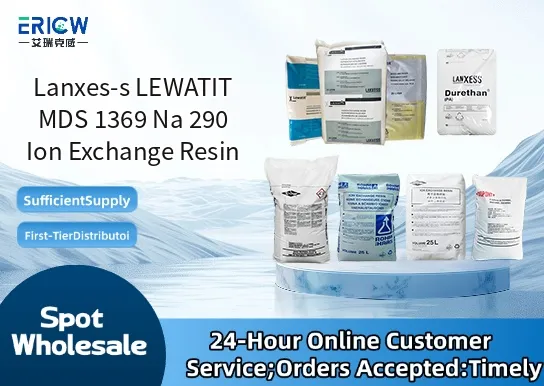
Highly uniform macroporous polystyrene-divinylbenzene matrix for consistent hydraulic performance and reduced pressure drop.
Sodium-form strong acid cation exchange resin with excellent chemical and thermal stability up to 120 °C.
Optimized bead size distribution (0.315–1.25 mm) enabling superior kinetics and minimal channeling in industrial columns.
Low fines content (<0.2% by weight) ensuring long service life and minimal system fouling in continuous operation.
Regenerable with standard NaCl brine solutions, supporting sustainable water reuse and low operational cost.
Softening of industrial process water in power generation and steam boiler feed systems.
Pretreatment for reverse osmosis (RO) and electrodeionization (EDI) units in high-purity water plants.
Removal of hardness ions (Ca²⁺, Mg²⁺) from cooling tower make-up water.
Cation exchange polishing in pharmaceutical-grade purified water (PW) and water-for-injection (WFI) systems.
Metal recovery and wastewater conditioning in electroplating and metal finishing operations.
| Chemical Type | Strong Acid Cation (SAC), sulfonated polystyrene-divinylbenzene |
| Product Form | Sodium form (Na⁺) |
| Appearance | Uniform amber spherical beads |
| Particle Size Range | 0.315 – 1.25 mm |
| Moisture Content | 47 – 53% (as shipped) |
| Ion Exchange Capacity (total) | ≥ 1.85 eq/L (dry basis) |
| Maximum Operating Temperature | 120 °C |
| Minimum Bed Depth | 750 mm (recommended for full capacity utilization) |
Q1: What is the primary functional group and ionic form of LEWATIT MDS 1369 Na 290?
A: LEWATIT MDS 1369 Na 290 is a strongly acidic cation exchange resin in the sodium (Na⁺) form, featuring sulfonic acid functional groups grafted onto a highly crosslinked polystyrene-divinylbenzene matrix.
Q2: In which types of water treatment applications is this resin typically deployed?
A: It is commonly used in industrial demineralization systems, boiler feedwater polishing, and condensate purification—especially where high chemical stability, excellent kinetics, and resistance to osmotic shock are required under cyclic service and regeneration conditions.
Q3: How does the macroporous structure of MDS 1369 Na 290 benefit its performance in challenging feedwaters?
A: The macroporous morphology provides enhanced mechanical strength and superior fouling resistance, allowing effective operation with feedwaters containing suspended solids, organic matter, or oxidants—without significant loss of capacity or bed integrity during long-term use.
Q4: What regeneration agents are compatible with this resin, and what are typical regeneration requirements?
A: Sodium form resins like MDS 1369 Na 290 are regenerated using sodium chloride (NaCl) brine. Regeneration efficiency depends on brine concentration, flow rate, and contact time—generally optimized within standard strong-acid cation regeneration protocols without requiring specialized chemicals.
Contact With Us:
E-mail: wangxingqiang@ericwchem.com
Have a Questions? Call Us:
Add:
Building A1, Jiete Industrial Park, Huangpu District, Guangzhou City, Guangdong Province, China