English
 Español
 tiếng việt
 русский
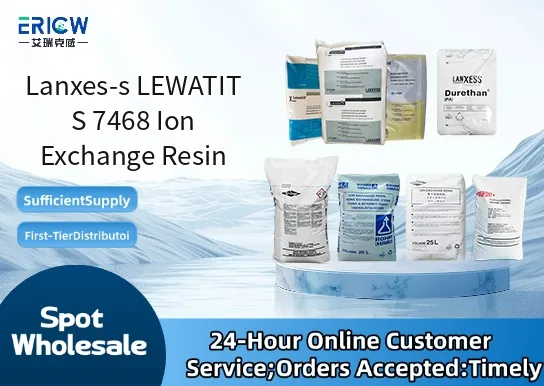
Highly stable macroporous strong acid cation exchange resin with sulfonic acid functional groups.
Exceptional resistance to oxidation, osmotic shock, and mechanical attrition under demanding industrial service conditions.
Optimized for high-efficiency softening and demineralization in continuous or batch operation modes.
Low sodium leakage and excellent regeneration efficiency with standard acid regenerants (e.g., HCl or H₂SO₄).
Consistent spherical bead morphology ensuring uniform hydraulic flow distribution and minimal pressure drop.
Industrial boiler feedwater pretreatment for steam generation systems.
Pharmaceutical-grade purified water (PW) and water-for-injection (WFI) production support.
Food & beverage processing water softening and dealkalization.
Power plant condensate polishing and high-purity make-up water treatment.
Electronics manufacturing ultrapure water (UPW) primary cation removal stage.
| Chemical Type | Strong Acid Cation (SAC), Macroporous Polystyrene-DVB with Sulfonic Acid Groups |
| Product Form | Moist, spherical beads |
| Appearance | Amber to light brown, uniform spherical beads |
| Functional Group | –SO₃H (Sulfonic acid) |
| Ion Form | H⁺ (Hydrogen form, standard packaging) |
| Particle Size Range | 0.3–1.2 mm (ASTM D2187) |
| Moisture Content | 45–50 % (w/w) |
| Maximum Operating Temperature | 120 °C |
Q1: What is the primary functional group and ionic form of LEWATIT S 7468?
A: LEWATIT S 7468 is a strongly acidic cation exchange resin based on a styrene-divinylbenzene matrix, functionalized with sulfonic acid groups. It is supplied in the sodium (Na⁺) form, enabling efficient removal of multivalent cations such as calcium and magnesium from aqueous streams.
Q2: In which industrial applications is this resin most commonly deployed?
A: LEWATIT S 7468 is widely used for softening and demineralization in high-purity water production, particularly in pharmaceutical, biotechnology, and power generation facilities. Its high selectivity for hardness ions and excellent physical stability make it suitable for continuous-duty service in fixed-bed and moving-bed ion exchange systems.
Q3: How does LEWATIT S 7468 compare to standard gel-type strong acid cation resins in terms of kinetic performance?
A: As a macroporous resin, LEWATIT S 7468 offers significantly improved mass transfer kinetics—especially in solutions containing suspended solids or organic foulants—compared to conventional gel-type resins. Its rigid, porous structure provides enhanced resistance to osmotic shock and better regeneration efficiency under variable operating conditions.
Q4: What are the recommended storage and handling precautions?
A: Store in original sealed packaging at temperatures between 5 °C and 40 °C, away from direct sunlight and strong oxidizing agents. Avoid freezing, as ice formation may damage the bead structure. When handling dry resin, use appropriate PPE to minimize dust inhalation; pre-hydrate before loading into columns to prevent air entrapment and channeling.
Contact With Us:
E-mail: wangxingqiang@ericwchem.com
Have a Questions? Call Us:
Add:
Building A1, Jiete Industrial Park, Huangpu District, Guangzhou City, Guangdong Province, China