English
 Español
 tiếng việt
 русский
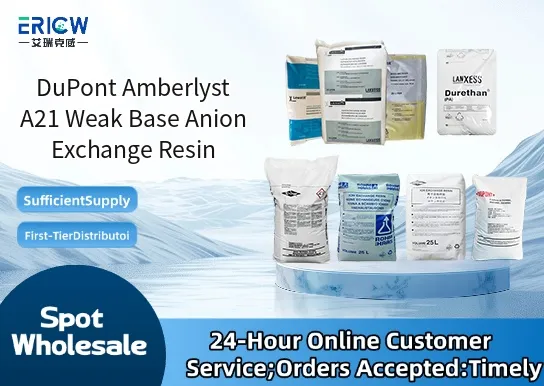
Highly selective for strong acid anions (e.g., Cl⁻, SO₄²⁻, NO₃⁻) with excellent capacity in low-pH environments.
Thermally stable up to 100 °C, enabling robust performance in demanding industrial processes.
Fast kinetics and low pressure drop due to uniform spherical bead morphology and optimized macroporous structure.
Easily regenerable with dilute alkali solutions (e.g., NaOH), minimizing chemical consumption and waste generation.
Chemically resistant to oxidizing agents and organic solvents, ensuring long service life in complex feed streams.
Decolorization and purification of pharmaceutical intermediates and active pharmaceutical ingredients (APIs).
Removal of acidic impurities from amine-containing process streams in fine chemical synthesis.
Neutralization and chloride/sulfate polishing in electroplating rinse water recovery systems.
Pre-treatment of feedwater for mixed-bed deionization units in high-purity water production.
Recovery and concentration of organic acids (e.g., acetic, citric) via pH-swing adsorption-desorption cycles.
| Chemical Type | Polystyrene-divinylbenzene copolymer with tertiary amine functional groups |
| Product Form | Moist, spherical beads |
| Appearance | Off-white to light yellow, translucent beads |
| Functional Group | –N(CH₃)₂ (dimethylamino) |
| Ion Exchange Capacity (Cl⁻ form) | ≥ 4.8 eq/L (dry basis) |
| Moisture Content | 45–55% (as shipped) |
| Bead Size Range | 0.3–1.2 mm (≥ 95% retained on 16 mesh, passes 60 mesh) |
| Uniformity Coefficient | ≤ 1.7 |
Q1: What is the primary functional group and base strength classification of Amberlyst A21?
A: Amberlyst A21 features tertiary amine functional groups grafted onto a styrene-divinylbenzene copolymer matrix, classifying it as a weak base anion exchange resin. It exhibits pH-dependent ion exchange capacity, with optimal performance in neutral to slightly alkaline conditions and reduced affinity under strongly acidic conditions.
Q2: How does Amberlyst A21 differ from strong base anion resins in terms of regeneration and chemical stability?
A: Unlike strong base resins, Amberlyst A21 can be efficiently regenerated using mild alkalis such as sodium carbonate or dilute sodium hydroxide—often without requiring stoichiometric excess. Its weak base nature also confers superior resistance to oxidative degradation and organic fouling, especially in feed streams containing oxidizing agents or high levels of natural organic matter.
Q3: In which types of industrial processes is Amberlyst A21 commonly applied?
A: It is widely used for selective removal of strong acid anions (e.g., sulfate, nitrate, chloride) from process streams, decolorization and purification of pharmaceutical intermediates, catalyst recovery in fine chemical synthesis, and as a scavenger resin for acidic impurities in solvent-based reactions—particularly where mild operating conditions and regenerability are critical.
Q4: Can Amberlyst A21 be used in aqueous-organic solvent mixtures?
A: Yes—Amberlyst A21 demonstrates good physical stability and maintained functionality in mixed aqueous-organic systems, including methanol, ethanol, acetone, and THF. However, swelling behavior and kinetic performance may vary depending on solvent polarity and water content; compatibility testing under actual process conditions is recommended.
Contact With Us:
E-mail: wangxingqiang@ericwchem.com
Have a Questions? Call Us:
Add:
Building A1, Jiete Industrial Park, Huangpu District, Guangzhou City, Guangdong Province, China