English
 Español
 tiếng việt
 русский
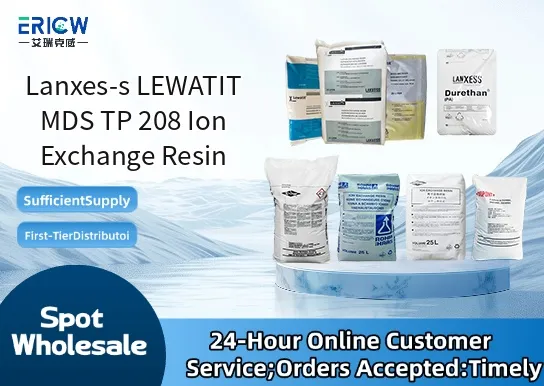
Highly stable macroporous acrylic matrix designed for superior mechanical and osmotic durability under cyclic loading.
Optimized for selective removal of heavy metal cations—including Ni²⁺, Cu²⁺, Zn²⁺, and Cd²⁺—from complex industrial effluents.
Low hydraulic resistance enables efficient operation at high flow rates without excessive pressure drop.
Excellent chemical resistance to oxidizing agents, acids, and alkalis, supporting robust regeneration performance.
Consistent spherical bead morphology ensures uniform bed distribution and predictable column hydraulics.
Heavy metal recovery and polishing in electroplating rinse water treatment systems.
Removal of toxic cations from mining leachate and metallurgical process streams.
Final polishing step in semiconductor ultrapure water (UPW) pretreatment loops.
Decentralized wastewater treatment for automotive and electronics manufacturing facilities.
Regenerable guard-bed resin for protecting downstream RO membranes from metal fouling.
| Chemical Type | Macroporous acrylic chelating resin with iminodiacetic functional groups |
| Product Form | Moist, spherical beads |
| Appearance | Off-white to light yellow, translucent beads |
| Functional Group | Iminodiacetic acid (IDA) |
| Ion Form | Sodium form (Na⁺), ready for conversion |
| Particle Size Range | 0.3–1.2 mm |
| Uniformity Coefficient | ≤1.6 |
| Moisture Content | 45–55% (w/w) |
Q1: What is the primary functional group and ionic form of LEWATIT MDS TP 208?
A: LEWATIT MDS TP 208 is a strongly acidic cation exchange resin based on a sulfonated polystyrene-divinylbenzene matrix, supplied in the sodium (Na⁺) form for general-purpose softening and selective metal ion removal applications.
Q2: Is this resin suitable for use in food-grade or pharmaceutical water treatment systems?
A: Yes — LEWATIT MDS TP 208 is manufactured and tested to meet requirements for use in purified water production where regulatory compliance with relevant pharmacopoeial standards (e.g., USP <1231>, Ph. Eur. 2.2.58) and food-contact safety principles apply; final suitability depends on system validation and local regulatory approval.
Q3: How does LEWATIT MDS TP 208 differ from conventional gel-type cation resins in terms of physical structure and performance?
A: It features a macroporous structure with high surface area and uniform pore distribution, offering superior kinetic performance, enhanced resistance to fouling by organic matter or suspended solids, and improved stability under varying pH and temperature conditions compared to standard gel-type resins.
Q4: Can LEWATIT MDS TP 208 be regenerated after exhaustion, and what are typical regeneration agents?
A: Yes — it is fully regenerable using common reagents such as sodium chloride (NaCl) for softening mode or mineral acids (e.g., HCl or H₂SO₄) for hydrogen-form operation; regeneration efficiency depends on feedwater quality, service cycle design, and proper hydraulic control during regeneration.
Contact With Us:
E-mail: wangxingqiang@ericwchem.com
Have a Questions? Call Us:
Add:
Building A1, Jiete Industrial Park, Huangpu District, Guangzhou City, Guangdong Province, China