English
 Español
 tiếng việt
 русский
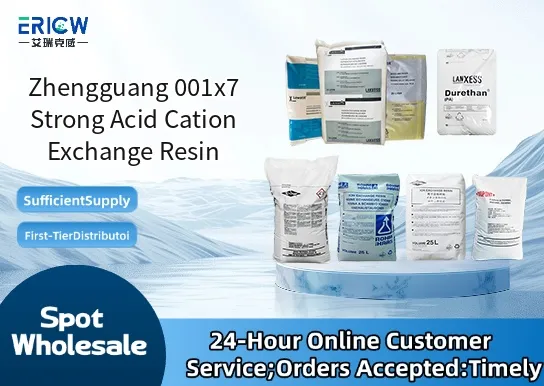
Highly cross-linked polystyrene-divinylbenzene matrix with uniform spherical beads for consistent hydraulic performance.
Sulfonic acid functional groups provide strong acidity and excellent cation exchange capacity across wide pH ranges (0–14).
Superior chemical stability in oxidizing environments and resistance to osmotic shock during repeated regeneration cycles.
Optimized particle size distribution (0.3–1.2 mm) ensures low pressure drop and high flow efficiency in fixed-bed systems.
Low soluble organic content and minimal fines generation, meeting stringent requirements for ultrapure water production.
Primary demineralization in power plant boiler feedwater treatment systems.
Softening of industrial process water in food & beverage and pharmaceutical manufacturing.
Cation removal prior to mixed-bed polishing in semiconductor-grade ultrapure water (UPW) plants.
Metal recovery and wastewater pretreatment in electroplating and metal finishing industries.
Pre-treatment for reverse osmosis (RO) systems to prevent scaling by removing hardness ions.
| Chemical Type | Strong acid cation exchange resin (sulfonated polystyrene-DVB) |
| Product Form | Moist, spherical beads |
| Appearance | Amber, transparent gel-type beads |
| Functional Group | Sulfonic acid (–SO₃H) |
| Ion Exchange Capacity (dry basis) | ≥ 4.8 eq/L (Na⁺ form) |
| Moisture Content | 45–50% (as shipped) |
| Particle Size Range | 0.3–1.2 mm (≥ 95% retained on 0.3 mm sieve) |
| Uniformity Coefficient | ≤ 1.6 |
Q1: What is the primary functional group and matrix structure of Zhengguang 001x7 resin?
A: Zhengguang 001x7 is a gel-type, styrene-divinylbenzene copolymer-based strong acid cation exchange resin with sulfonic acid (–SO₃H) functional groups attached to the aromatic backbone. Its crosslinking degree is typically indicated by the "7" designation, representing approximately 7% divinylbenzene content, which balances swelling capacity, mechanical stability, and ion exchange kinetics.
Q2: In which water treatment applications is this resin most commonly deployed?
A: It is widely used in softening and demineralization systems for industrial boiler feedwater, cooling tower makeup, and process water purification. The resin effectively removes calcium, magnesium, sodium, and other multivalent cations, especially in fixed-bed and counter-current regeneration configurations where high total exchange capacity and consistent regeneration efficiency are required.
Q3: How does temperature affect its performance and operational lifetime?
A: Performance remains stable within the recommended operating range of 5–120°C; however, prolonged exposure above 100°C may accelerate matrix degradation and reduce cycle life. Optimal ion exchange kinetics and physical integrity are maintained under standard ambient to moderately elevated temperatures typical in municipal and industrial water treatment environments.
Q4: What regeneration chemicals and conditions are generally recommended?
A: Sodium chloride (NaCl) brine is the standard regenerant for softening service, while hydrochloric acid (HCl) or sulfuric acid (H₂SO₄) is used for full demineralization. Regeneration efficiency depends on concentration, flow rate, contact time, and resin bed condition—typical acid concentrations range from 2% to 5%, and brine concentrations from 8% to 12%, applied at controlled linear velocities.
Contact With Us:
E-mail: wangxingqiang@ericwchem.com
Have a Questions? Call Us:
Add:
Building A1, Jiete Industrial Park, Huangpu District, Guangzhou City, Guangdong Province, China