English
 Español
 tiếng việt
 русский
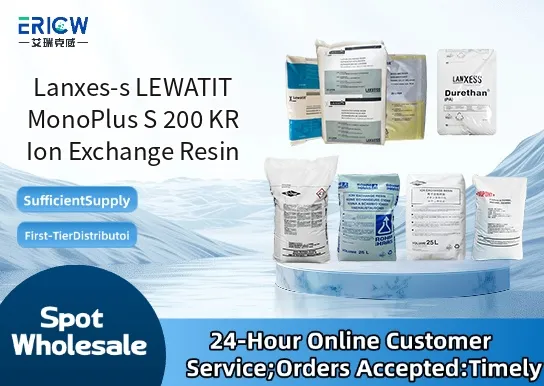
Highly uniform spherical beads ensure consistent hydraulic performance and low pressure drop across packed beds.
Superior chemical stability in strong acid environments, enabling reliable operation in aggressive regeneration conditions.
Optimized for high selectivity toward divalent cations (e.g., Ca²⁺, Mg²⁺), delivering efficient softening with minimal sodium leakage.
Low total organic carbon (TOC) release, meeting stringent requirements for pharmaceutical and ultrapure water applications.
Enhanced physical durability and abrasion resistance, extending service life under frequent backwash and regeneration cycles.
Industrial boiler feedwater softening to prevent scale formation and improve thermal efficiency.
Pretreatment for reverse osmosis (RO) systems in power generation and semiconductor manufacturing.
Production of ultrapure water (UPW) for pharmaceutical and biotechnology processes.
Cation removal in food & beverage processing, including sugar decolorization and juice demineralization.
Metal recovery and wastewater polishing in electroplating and metal finishing industries.
| Chemical Type | Strong acid cation exchange resin (sulfonated polystyrene-divinylbenzene gel matrix) |
| Product Form | Moist, spherical beads |
| Appearance | Opaque amber to light brown beads |
| Functional Group | Sulfonic acid (–SO₃H) |
| Ion Form | Na⁺ form (standard shipping condition) |
| Particle Size Range | 0.3–1.2 mm (≥95% retained on 0.3 mm sieve) |
| Moisture Content | 47–53% (w/w) |
| Maximum Operating Temperature | 120 °C (short-term); 100 °C (continuous) |
Q1: What is the primary functional group and ionic form of LEWATIT MonoPlus S 200 KR?
A: LEWATIT MonoPlus S 200 KR is a strongly acidic cation exchange resin with sulfonic acid functional groups, supplied in the potassium (K⁺) ionic form. It is designed for high selectivity toward multivalent cations in demanding water treatment applications.
Q2: How does this resin differ from standard gel-type cation exchangers?
A: Unlike conventional gel-type resins, LEWATIT MonoPlus S 200 KR features a macroporous matrix with uniform spherical beads and optimized particle size distribution. This enhances kinetic performance, mechanical stability under rapid cycling, and resistance to organic fouling—particularly beneficial in pretreatment of surface or wastewater feeds.
Q3: Can this resin be used in food-grade or pharmaceutical water systems?
A: Yes—LEWATIT MonoPlus S 200 KR is manufactured and tested to meet relevant global regulatory expectations for ion exchange resins used in purified water production, including compliance with pharmacopoeial requirements for extractables and structural integrity. Final suitability depends on system validation and local regulatory review.
Q4: What regeneration protocol is recommended for optimal service life?
A: Regeneration is typically performed using sodium chloride (NaCl) solution at standard concentrations and flow rates. For extended cycle stability and reduced rinse demand, controlled regeneration with optimized salt dosage and contact time—adjusted per feedwater composition and operational goals—is advised. Acid-based regeneration may be considered for specific hardness removal scenarios but requires compatibility verification.
Contact With Us:
E-mail: wangxingqiang@ericwchem.com
Have a Questions? Call Us:
Add:
Building A1, Jiete Industrial Park, Huangpu District, Guangzhou City, Guangdong Province, China