English
 Español
 tiếng việt
 русский
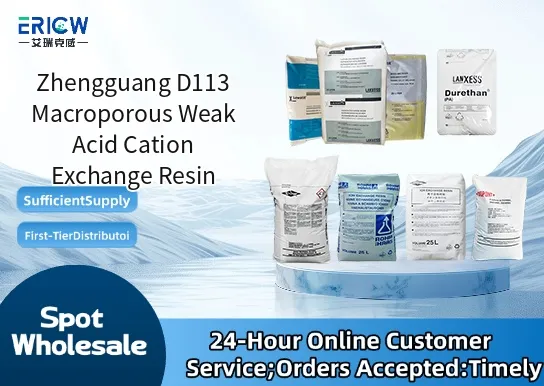
Highly stable macroporous matrix ensures excellent mechanical strength and resistance to osmotic shock during repeated regeneration cycles.
Carboxylic acid functional groups provide superior selectivity for divalent cations (e.g., Ca²⁺, Mg²⁺) over monovalent ions like Na⁺.
Low operating pH range (typically 4–7) enables efficient softening and demineralization of high-alkalinity feedwaters without acid pretreatment.
Fast kinetics and high exchange capacity (>8.0 eq/L in H⁺ form) support compact system design and reduced vessel footprint.
Chemically robust structure withstands exposure to oxidants, organics, and suspended solids commonly found in industrial wastewater streams.
Industrial water softening in boiler feedwater and cooling tower makeup systems.
Pretreatment for reverse osmosis (RO) and nanofiltration (NF) systems to prevent scaling by selective removal of hardness ions.
Recovery of metal ions (e.g., Ni²⁺, Cu²⁺, Co²⁺) from electroplating rinse waters and hydrometallurgical leachates.
Decalcification and alkalinity reduction in sugar refining and beverage production processes.
Removal of heavy metals from municipal and industrial wastewater prior to discharge or reuse.
| Chemical Type | Macroporous weak acid cation exchange resin with carboxylic functional groups |
| Product Form | Moist spherical beads, ready-to-use in sodium or hydrogen form |
| Appearance | Opaque light amber to brown beads |
| Functional Group | –CH₂–COOH (carboxylic acid) |
| Ion Exchange Capacity (H⁺ form) | ≥ 8.0 eq/L (dry basis) |
| Particle Size Range | 0.4 – 1.25 mm (≥ 95% retained on 0.315 mm sieve) |
| Moisture Content | 45 – 55% (w/w) |
| pH Stability Range | 2 – 12 (short-term exposure); optimal operation at pH 4–7 |
Q1: What distinguishes D113 from gel-type weak acid resins?
A: D113 features a macroporous structure, providing superior mechanical strength, faster ion exchange kinetics, and enhanced resistance to fouling in turbid or high-suspended-solids feed streams—unlike conventional gel-type weak acid resins, which swell significantly and are more prone to physical degradation under varying pH or temperature conditions.
Q2: In which pH range does D113 exhibit optimal cation exchange capacity?
A: As a weak acid cation exchanger based on carboxylic functional groups, D113 operates most effectively in neutral to slightly alkaline conditions (pH ~5–9), where its functional groups are fully dissociated. Exchange capacity declines significantly below pH 4 due to protonation of carboxyl sites.
Q3: Can D113 be used for selective removal of heavy metal ions from industrial wastewater?
A: Yes—D113 demonstrates preferential affinity for divalent and trivalent cations (e.g., Ca²⁺, Mg²⁺, Cu²⁺, Ni²⁺, Fe³⁺) over monovalent ions like Na⁺ or K⁺, especially at near-neutral pH. Its macroporous morphology further supports efficient uptake in complex, real-world effluents containing organics or particulates.
Q4: How is D113 regenerated after exhaustion?
A: Regeneration is typically achieved using dilute solutions of strong acids such as HCl or H₂SO₄ at low concentrations (e.g., 2–5% w/w). Due to the weak acidity of its carboxyl groups, D113 requires less regenerant than strong acid resins and achieves high regeneration efficiency with short contact times and moderate flow rates.
Contact With Us:
E-mail: wangxingqiang@ericwchem.com
Have a Questions? Call Us:
Add:
Building A1, Jiete Industrial Park, Huangpu District, Guangzhou City, Guangdong Province, China