English
 Español
 tiếng việt
 русский
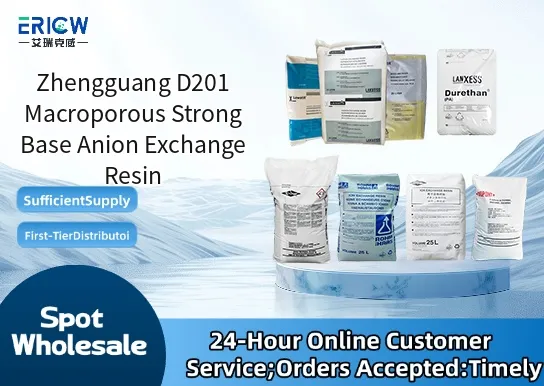
Macroporous structure ensures excellent physical stability and resistance to osmotic shock during repeated regeneration cycles.
Highly cross-linked polystyrene matrix with quaternary ammonium functional groups provides strong base anion exchange capacity and superior selectivity for multivalent anions.
Low pressure drop and high flow tolerance make it ideal for high-throughput industrial water treatment systems.
Chemically robust under alkaline and oxidizing conditions, enabling reliable performance in demanding process environments.
Consistent bead size distribution (0.3–1.2 mm) ensures uniform hydraulic behavior and minimizes channeling in fixed-bed columns.
Removal of nitrate, sulfate, chromate, and arsenic species from potable water and wastewater streams.
Decolorization and organic impurity removal in pharmaceutical and fine chemical manufacturing effluents.
Purification of ultrapure water for semiconductor fabrication and power plant boiler feedwater systems.
Recovery and concentration of valuable anionic species (e.g., molybdate, tungstate) in hydrometallurgical processes.
Pre-treatment for reverse osmosis and electrodialysis systems to reduce scaling and fouling potential.
| Chemical Type | Macroporous, strongly basic anion exchange resin with quaternary ammonium functional groups |
| Product Form | Moist, spherical beads |
| Appearance | Off-white to light yellow, uniform spherical particles |
| Particle Size Range | 0.3–1.2 mm (≥95% retained on 16–60 mesh screens) |
| Moisture Content | 45–55% (as shipped) |
| Total Exchange Capacity (Cl⁻ form) | ≥1.0 eq/L (dry basis), ≥0.45 eq/L (wet basis) |
| Functional Group | Triethylbenzylammonium |
| Maximum Operating Temperature | 60 °C (short-term up to 80 °C) |
Q1: What distinguishes D201 from gel-type strong base anion resins?
A: D201 features a macroporous structure with high surface area and well-developed pore network, offering superior mechanical stability, faster ion exchange kinetics in viscous or fouling-prone solutions, and enhanced resistance to organic fouling compared to conventional gel-type resins.
Q2: In which water treatment applications is D201 most commonly used?
A: D201 is widely applied in demineralization systems, nitrate/nitrite removal from drinking water, sulfate and chloride reduction in industrial process water, and as a polishing resin in pharmaceutical and electronics-grade ultrapure water production.
Q3: How does D201 perform in the presence of natural organic matter (NOM)?
A: Due to its macroporous architecture and highly crosslinked matrix, D201 exhibits improved tolerance to NOM fouling compared to gel resins, maintaining more consistent capacity and longer service cycles in surface water or groundwater with moderate humic content.
Q4: Can D201 be regenerated effectively after exhaustion?
A: Yes — D201 is fully regenerable using standard sodium hydroxide solutions. Its macroporous structure supports efficient regeneration even after repeated cycles, with stable functional group retention and minimal capacity loss under proper operating conditions.
Contact With Us:
E-mail: wangxingqiang@ericwchem.com
Have a Questions? Call Us:
Add:
Building A1, Jiete Industrial Park, Huangpu District, Guangzhou City, Guangdong Province, China