English
 Español
 tiếng việt
 русский
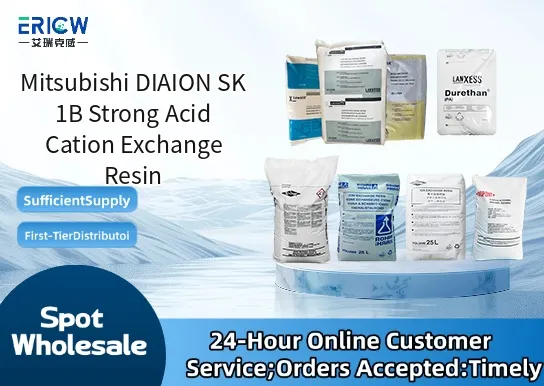
Highly uniform spherical beads ensuring consistent hydraulic performance and low pressure drop.
Superior chemical stability in strong acid and oxidizing environments, enabling extended service life.
Excellent mechanical strength and abrasion resistance for reliable operation in high-flow and regeneration-intensive systems.
Fast exchange kinetics and high total capacity (≥ 2.0 eq/L in Na⁺ form) for efficient ion removal.
Low soluble organics leaching, meeting stringent purity requirements for pharmaceutical and electronics-grade water applications.
Primary cation removal in high-purity water production for semiconductor manufacturing.
Softening of industrial boiler feedwater to prevent scale formation and corrosion.
Pre-treatment polishing step in pharmaceutical water systems (PW/WFI).
Catalytic support and metal recovery in hydrometallurgical processes.
Decationization in food & beverage processing where low sodium leakage is critical.
| Chemical Type | Sulfonated polystyrene-divinylbenzene copolymer |
| Product Form | Moist, spherical beads |
| Appearance | Amber, transparent gel-type resin |
| Functional Group | Sulfonic acid (–SO₃H) |
| Ion Form | Hydrogen (H⁺) or Sodium (Na⁺) form available |
| Total Exchange Capacity | ≥ 2.0 eq/L (dry weight basis, H⁺ form) |
| Particle Size Range | 0.4 – 0.7 mm (95% retained on 25 mesh, passes 45 mesh) |
| Moisture Content | 48 – 55% (as shipped, H⁺ form) |
Q1: What is the primary functional group and matrix structure of DIAION SK 1B?
A: DIAION SK 1B is a gel-type, sulfonated polystyrene-divinylbenzene (PS-DVB) strong acid cation exchange resin, featuring sulfonic acid (–SO₃H) functional groups covalently bound to a crosslinked aromatic polymer matrix.
Q2: How does SK 1B differ from macroporous cation resins in terms of application suitability?
A: As a gel-type resin, SK 1B offers high total capacity and excellent kinetics for ions in clean, low-turbidity solutions—making it ideal for softening, demineralization, and polishing in municipal or industrial water treatment. It is less suitable than macroporous resins for applications involving high organic fouling, suspended solids, or oxidative conditions.
Q3: What regeneration chemicals and typical regenerant concentrations are recommended for SK 1B?
A: Sodium chloride (NaCl) is most commonly used for softening service; sulfuric acid (H₂SO₄) or hydrochloric acid (HCl) is preferred for full demineralization. Regeneration efficiency depends on concentration, flow rate, and contact time—standard practice uses 5–10% NaCl or 2–5% acid solutions under controlled conditions.
Q4: Can SK 1B be used in food-grade or pharmaceutical water systems?
A: Yes—DIAION SK 1B is manufactured and tested to meet requirements for use in purified water production per pharmacopoeial standards (e.g., USP <1231>, EP 2.2.45), provided it is properly rinsed and validated within the system. Confirmation of compliance with specific regulatory expectations should be coordinated with Mitsubishi Chemical and end-use system auditors.
Contact With Us:
E-mail: wangxingqiang@ericwchem.com
Have a Questions? Call Us:
Add:
Building A1, Jiete Industrial Park, Huangpu District, Guangzhou City, Guangdong Province, China