English
 Español
 tiếng việt
 русский
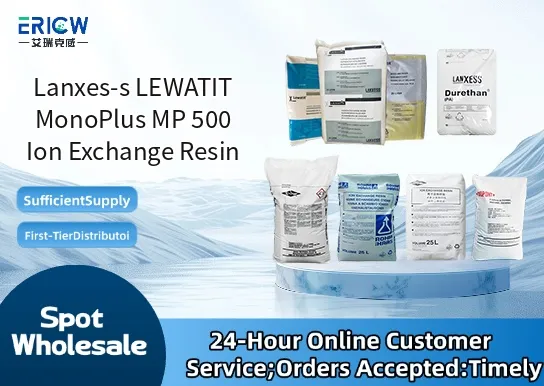
Highly uniform spherical beads ensuring consistent hydraulic performance and low pressure drop.
Superior chemical stability in strong acid and alkali environments, enabling robust regeneration cycles.
Optimized for high selectivity toward divalent cations such as Ca²⁺ and Mg²⁺ in softening applications.
Low osmotic swelling behavior, minimizing physical stress during repeated ion exchange cycles.
Manufactured to strict ISO 9001-certified quality standards with full traceability and batch documentation.
Industrial water softening for boiler feedwater and process water systems.
Pretreatment of reverse osmosis (RO) feed water to prevent scaling.
Removal of heavy metal ions (e.g., Cu²⁺, Ni²⁺, Zn²⁺) from electroplating rinse waters.
Food-grade demineralization in beverage and dairy processing plants.
Catalyst support and purification in fine chemical synthesis processes.
| Chemical Type | Strong Acid Cation (SAC) Exchange Resin — Sulfonated Polystyrene-DVB Matrix |
| Product Form | Moist, spherical beads |
| Appearance | Opaque amber to light brown spheres |
| Functional Group | Sulfonic acid (–SO₃H) |
| Ion Form | H⁺ form (ready for use after standard acid regeneration) |
| Moisture Content | 46–50 % (w/w) |
| Particle Size Range | 0.4–1.2 mm (≥95 % retained on 0.315 mm sieve) |
| Uniformity Coefficient | ≤1.6 |
Q1: What is the primary functional group and ionic form of LEWATIT MonoPlus MP 500?
A: LEWATIT MonoPlus MP 500 is a strongly acidic cation exchange resin based on a styrene-divinylbenzene matrix, functionalized with sulfonic acid groups. It is supplied in the sodium (Na⁺) form, making it suitable for softening and demineralization applications where monovalent cation removal is required.
Q2: How does MP 500 differ from conventional gel-type cation resins in terms of physical structure and performance?
A: MP 500 features a uniform particle size distribution and a macroporous morphology, which enhances kinetic performance, improves resistance to fouling, and provides greater stability under varying operating conditions—including fluctuating flow rates, temperature shifts, and feed water quality variations—compared to standard gel-type resins.
Q3: Is LEWATIT MonoPlus MP 500 suitable for use in pharmaceutical or food-grade water purification systems?
A: Yes, MP 500 is manufactured and tested to meet requirements for use in high-purity water applications, including those supporting pharmaceutical and food-grade production. It complies with relevant global regulatory expectations for ion exchange resins used in water treatment, though final suitability depends on system validation and local regulatory review.
Q4: What regeneration chemicals and typical conditions are recommended for MP 500?
A: Sodium chloride (NaCl) is the standard regenerant for MP 500 in softening service. Regeneration is typically performed at ambient temperature using a 5–10% NaCl solution at a dosage of 100–150 g NaCl per liter of resin. Optimal efficiency depends on contact time, flow rate, and feed water composition.
Contact With Us:
E-mail: wangxingqiang@ericwchem.com
Have a Questions? Call Us:
Add:
Building A1, Jiete Industrial Park, Huangpu District, Guangzhou City, Guangdong Province, China