English
 Español
 tiếng việt
 русский
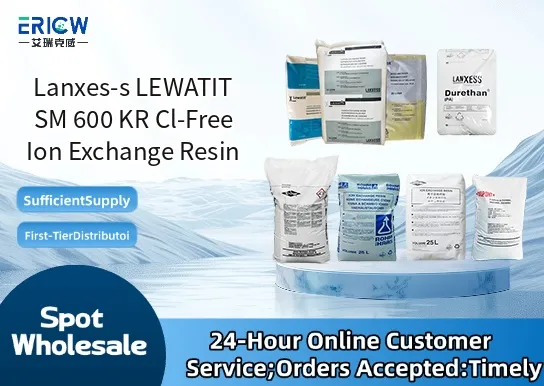
Chloride-free formulation ensures no chloride ion leaching, critical for ultra-pure water production and sensitive downstream processes.
Highly stable macroporous polystyrene matrix provides excellent mechanical strength and resistance to osmotic shock during regeneration cycles.
Optimized for selective removal of multivalent cations (e.g., Ca²⁺, Mg²⁺, Fe³⁺) with low sodium leakage and high exchange capacity.
Low moisture content and uniform spherical bead morphology ensure consistent hydraulic performance and reduced pressure drop in service columns.
Compatible with standard acid regeneration protocols (HCl or H₂SO₄), enabling efficient reuse without degradation of functional groups.
Final polishing step in pharmaceutical-grade purified water (PW) and water-for-injection (WFI) systems.
Cation removal in semiconductor ultrapure water (UPW) pretreatment and polishing loops.
Hardness and heavy metal abatement in laboratory and analytical instrument feedwater systems.
Pre-treatment for reverse osmosis (RO) and electrodeionization (EDI) units requiring chloride-free influent.
Specialty chemical manufacturing where chloride contamination must be avoided in final product streams.
| Chemical Type | Strong Acid Cation (SAC), sulfonated macroporous polystyrene-divinylbenzene copolymer |
| Product Form | Moist, spherical beads |
| Appearance | Amber to light brown, uniform granules |
| Functional Group | Sulfonic acid (–SO₃H) |
| Ion Form | Hydrogen (H⁺) form, chloride-free |
| Moisture Content | 47 – 53 % (w/w) |
| Particle Size Range | 0.3 – 1.2 mm |
| Uniformity Coefficient | ≤ 1.8 |
Q1: What makes Lanxes-s LEWATIT SM 600 KR different from standard chloride-form strong acid cation exchange resins?
A: Unlike conventional chloride-form resins, Lanxes-s LEWATIT SM 600 KR is supplied in the hydrogen (H⁺) form and is specifically processed to be chloride-free — eliminating the risk of chloride ion leaching during use. This is critical for applications where chloride contamination must be strictly avoided, such as in high-purity water systems or sensitive catalytic processes.
Q2: Can this resin be used directly in pharmaceutical or food-grade water polishing applications?
A: Lanxes-s LEWATIT SM 600 KR is designed for high-purity water treatment and meets general requirements for use in pharmaceutical and food-related water systems when operated under validated conditions. However, end-use compliance depends on full system validation, regeneration protocols, and adherence to relevant regional regulatory expectations for ion exchange materials.
Q3: How should the resin be stored to maintain its chloride-free specification?
A: Store in original sealed packaging at temperatures between 5 °C and 30 °C, away from direct sunlight and sources of chlorine or chloride-containing vapors. Once opened, minimize exposure to ambient air and avoid contact with saline solutions or chlorinated cleaning agents to preserve its chloride-free integrity.
Q4: Is special regeneration required after initial use?
A: Standard regeneration with dilute sulfuric or hydrochloric acid is effective; however, to maintain chloride-free performance, it is recommended to follow regeneration with thorough rinsing using deionized water until rinse conductivity stabilizes and chloride-specific testing confirms absence of residual chloride ions.
Contact With Us:
E-mail: wangxingqiang@ericwchem.com
Have a Questions? Call Us:
Add:
Building A1, Jiete Industrial Park, Huangpu District, Guangzhou City, Guangdong Province, China