English
 Español
 tiếng việt
 русский
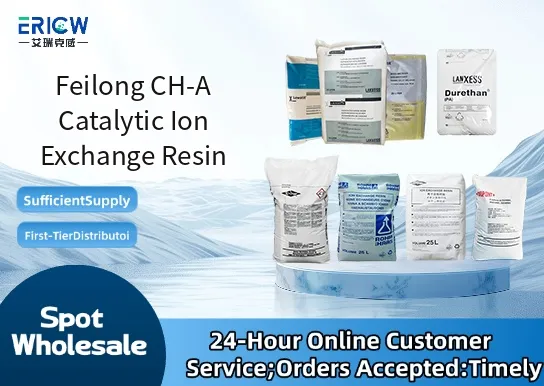
Highly selective catalytic functionality for targeted ion exchange and redox-assisted reactions.
Exceptional chemical stability in acidic, alkaline, and oxidizing environments (pH 1–14).
Thermally robust up to 120 °C with minimal functional group leaching under continuous operation.
Uniform spherical bead morphology ensuring low pressure drop and consistent flow distribution.
Regenerable using standard reagents (e.g., dilute HCl, NaOH), supporting sustainable process cycles.
Heavy metal recovery and speciation control in hydrometallurgical leach solutions.
Catalytic denitrification of industrial wastewater via coupled ion exchange–redox pathways.
Pretreatment of ultrapure water systems to remove trace transition metals and catalytic impurities.
Selective separation of rare earth elements (REEs) from complex mixed feedstocks.
Stabilization and removal of reactive anions (e.g., arsenate, selenate) in mining effluents.
| Chemical Type | Macroporous polystyrene-divinylbenzene copolymer with immobilized catalytic chelating groups |
| Product Form | Moist, spherical beads |
| Appearance | Amber to light brown, free-flowing granules |
| Particle Size Range | 0.3–1.2 mm (95% retained on 16–60 mesh sieves) |
| Wet Density (as shipped) | 1.08–1.15 g/mL |
| Functional Capacity (total) | ≥ 2.2 meq/mL (wet volume) |
| Maximum Operating Temperature | 120 °C |
| Storage Conditions | 5–40 °C, protected from freezing and direct sunlight |
Q1: What is the primary catalytic function of Feilong CH-A in ion exchange applications?
A: Feilong CH-A is a specially formulated catalytic ion exchange resin designed to accelerate selective ion displacement and metal ion recovery processes—particularly in low-concentration aqueous streams—without requiring harsh chemical regeneration or elevated temperatures.
Q2: How does CH-A differ from conventional strong acid cation exchange resins?
A: Unlike standard cation resins, CH-A incorporates tailored functional groups that provide both high selectivity for transition metals (e.g., Cu²⁺, Ni²⁺, Co²⁺) and intrinsic catalytic activity—enabling simultaneous ion capture and redox-facilitated stabilization, especially in electroplating rinse water and hydrometallurgical leachates.
Q3: Is CH-A suitable for continuous-flow systems, and what are key operational considerations?
A: Yes—CH-A is engineered for stable performance in packed-bed and fluidized-bed configurations. Optimal operation requires controlled flow rates and pH management (typically pH 2–5), with periodic mild regeneration using dilute acid or chelant solutions to maintain catalytic integrity over extended cycles.
Q4: Can CH-A be used in food-contact or pharmaceutical water polishing applications?
A: CH-A is not certified for direct food-contact or pharmaceutical-grade water treatment. It is intended for industrial process streams, including wastewater remediation, metal recovery, and catalyst support in specialty chemical synthesis—where regulatory compliance is determined by end-use system validation.
Contact With Us:
E-mail: wangxingqiang@ericwchem.com
Have a Questions? Call Us:
Add:
Building A1, Jiete Industrial Park, Huangpu District, Guangzhou City, Guangdong Province, China