English
 Español
 tiếng việt
 русский
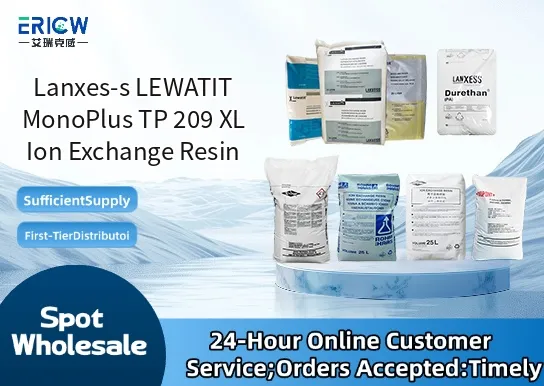
Highly uniform spherical beads with narrow particle size distribution for low pressure drop and excellent hydraulic performance.
Superior chemical and osmotic stability, enabling reliable long-term operation in demanding industrial water treatment environments.
Optimized macroporous acrylic matrix providing exceptional resistance to organic fouling and chlorine degradation.
High total exchange capacity and fast kinetics for efficient removal of divalent cations including Ca²⁺ and Mg²⁺.
Designed for high-regeneration efficiency with reduced acid consumption and minimized wastewater generation.
Softening of industrial process water in power generation and boiler feedwater pretreatment.
Purification of rinse water in surface finishing and electroplating operations.
Removal of hardness ions from pharmaceutical-grade purified water (PW) systems.
Pre-treatment for reverse osmosis (RO) and electrodeionization (EDI) units to prevent scaling.
Recovery and polishing of process streams in food & beverage and chemical manufacturing.
| Chemical Type | Macroporous strong-acid cation exchange resin (sulfonated acrylic matrix) |
| Product Form | Moist, spherical beads |
| Appearance | Off-white to light yellow, translucent beads |
| Functional Group | Sulfonic acid (–SO₃H) |
| Ion Form | H⁺ form (ready-to-use) |
| Particle Size Range (mm) | 0.45 – 0.75 |
| Moisture Content (%) | 48 – 55 |
| Uniformity Coefficient | ≤ 1.6 |
Q1: What is the primary functional group and matrix type of LEWATIT MonoPlus TP 209 XL?
A: LEWATIT MonoPlus TP 209 XL is a strongly acidic cation exchange resin based on a highly crosslinked polystyrene-divinylbenzene (PS-DVB) matrix, functionalized with sulfonic acid groups. Its monodisperse bead structure and optimized crosslinking support high selectivity and kinetic performance in demanding water treatment applications.
Q2: Is this resin suitable for pharmaceutical or ultrapure water systems?
A: Yes — LEWATIT MonoPlus TP 209 XL is widely used in high-purity water production, including pharmaceutical-grade purified water (PW) and water for injection (WFI) pretreatment stages. It meets stringent requirements for low extractables, high chemical stability, and consistent regeneration behavior under controlled operating conditions.
Q3: How does TP 209 XL differ from standard gel-type strong acid cation resins?
A: TP 209 XL features a macroporous structure with uniform particle size distribution (monodisperse), offering superior resistance to fouling, faster ion exchange kinetics, and enhanced mechanical stability during repeated swelling/shrinking cycles — especially beneficial in applications involving variable feedwater quality or frequent regeneration.
Q4: What regeneration chemicals are recommended, and how does regeneration efficiency compare to conventional resins?
A: Sodium chloride (NaCl) is the standard regenerant for softening service; sulfuric acid (H₂SO₄) or hydrochloric acid (HCl) may be used for full cation removal. Due to its optimized porosity and surface area, TP 209 XL typically achieves higher regeneration efficiency and lower regenerant consumption per equivalent compared to conventional gel-type resins, particularly in challenging water matrices.
Contact With Us:
E-mail: wangxingqiang@ericwchem.com
Have a Questions? Call Us:
Add:
Building A1, Jiete Industrial Park, Huangpu District, Guangzhou City, Guangdong Province, China