English
 Español
 tiếng việt
 русский
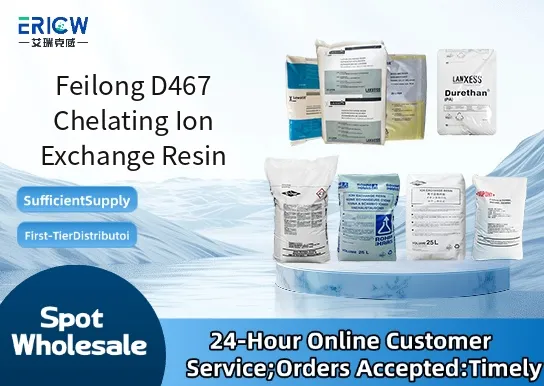
Highly selective for heavy metal ions including Cu²⁺, Ni²⁺, Co²⁺, and Zn²⁺ under acidic to neutral pH conditions.
Stable iminodiacetic acid functional groups ensure excellent chemical and thermal resistance in industrial process streams.
Low swelling ratio and high mechanical strength enable reliable performance in packed-bed and continuous ion exchange systems.
Regenerable with dilute acid (e.g., 2–4% H₂SO₄ or HCl), supporting sustainable operation and reduced waste disposal costs.
Consistent bead uniformity and narrow particle size distribution (0.3–1.2 mm) optimize hydraulic flow and mass transfer efficiency.
Removal and recovery of copper from electroplating rinse waters and PCB manufacturing effluents.
Selective separation of nickel and cobalt from hydrometallurgical leach solutions in battery metal refining.
Purification of process streams in pharmaceutical synthesis where trace metal catalysts must be strictly controlled.
Treatment of mining wastewater to meet stringent discharge limits for heavy metals prior to environmental release.
Pre-concentration of target metals from low-concentration industrial wastewaters for subsequent electrowinning or precipitation.
| Chemical Type | Iminodiacetic acid chelating resin |
| Product Form | Moist, spherical beads |
| Appearance | Off-white to light yellow, uniform spherical particles |
| Functional Group | –N(CH₂COOH)₂ |
| Ion Form | Na⁺ form (standard), available in H⁺ or other forms upon request |
| Particle Size Range | 0.3 – 1.2 mm |
| Moisture Content | 45 – 50% (w/w) |
| Capacity (Cu²⁺, min.) | 1.8 – 2.0 eq/L (dry resin basis) |
Q1: What types of metal ions does Feilong D467 effectively bind in industrial water treatment applications?
A: Feilong D467 is specifically designed to chelate transition and heavy metal cations such as copper (Cu²⁺), nickel (Ni²⁺), cobalt (Co²⁺), zinc (Zn²⁺), and cadmium (Cd²⁺), with particularly strong affinity under neutral to slightly alkaline pH conditions.
Q2: How does Feilong D467 differ from conventional strong acid cation exchange resins?
A: Unlike standard sulfonated polystyrene resins, Feilong D467 features immobilized chelating functional groups—primarily iminodiacetate moieties—that provide selective, high-stability complexation with target metals, enabling effective removal even at low concentrations and reducing competitive interference from calcium or sodium ions.
Q3: Can Feilong D467 be regenerated after saturation, and what are typical regeneration considerations?
A: Yes, Feilong D467 is regenerable using acidic solutions (e.g., dilute HCl or H₂SO₄) or complexing agents like EDTA, depending on the bound metal species. Regeneration efficiency and cycle life depend on feedwater composition, operating pH, and avoidance of oxidizing agents or extreme pH excursions during service or recovery.
Q4: Is Feilong D467 suitable for use in pharmaceutical or food-grade purification processes?
A: Feilong D467 is manufactured to meet general industrial purity standards and is widely applied in high-purity water systems for electronics and electroplating. For regulated pharmaceutical or food-contact applications, end users must conduct full compatibility and extractables testing per their internal quality protocols and applicable regional requirements.
Contact With Us:
E-mail: wangxingqiang@ericwchem.com
Have a Questions? Call Us:
Add:
Building A1, Jiete Industrial Park, Huangpu District, Guangzhou City, Guangdong Province, China