English
 Español
 tiếng việt
 русский
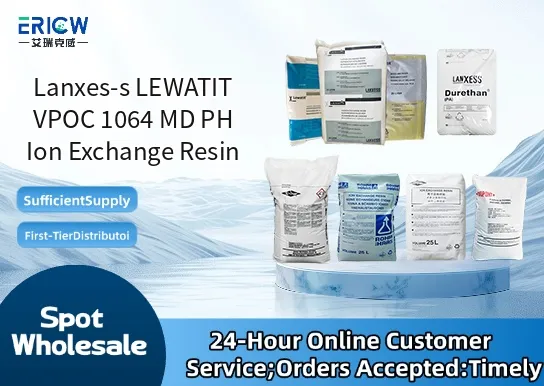
Highly selective for phosphate removal under neutral to slightly alkaline conditions.
Optimized macroporous polyacrylate matrix ensures excellent kinetic performance and fouling resistance.
Stable physical structure with low attrition, enabling long service life in continuous-flow systems.
pH-independent operation across pH 4–10, maintaining consistent capacity without regeneration dependency.
Low sodium leakage and minimal co-ion displacement, supporting ultra-pure water polishing requirements.
Phosphate control in boiler feedwater and steam cycle condensate polishing systems.
Prevention of scale formation in high-pressure industrial cooling towers.
Final-stage polishing in pharmaceutical-grade purified water (PW) and water-for-injection (WFI) production.
Treatment of municipal and industrial wastewater effluents to meet stringent phosphorus discharge limits.
Removal of orthophosphate and organophosphates from semiconductor process rinse water.
| Chemical Type | Macroporous polyacrylate-based anion exchange resin with highly selective quaternary ammonium functional groups |
| Product Form | Moist spherical beads |
| Appearance | Off-white to light yellow, uniform spherical beads |
| Functional Group | Quaternary ammonium (Type I) |
| Ionic Form | Chloride (Cl⁻) |
| Particle Size Range | 0.3–1.2 mm |
| Moisture Content | 45–55% (w/w) |
| Maximum Operating Temperature | 60 °C |
Q1: What is the primary functional mechanism of LEWATIT VPOC 1064 MD PH resin in pH adjustment applications?
A: LEWATIT VPOC 1064 MD PH is a weakly acidic cation exchange resin based on carboxylic functional groups. It operates via reversible proton exchange, selectively absorbing multivalent cations (e.g., Ca²⁺, Mg²⁺) while releasing H⁺ ions—enabling gentle, buffer-compatible pH reduction without introducing strong mineral acids or excess chloride/sulfate anions.
Q2: Is this resin suitable for use in pharmaceutical or bioprocessing water systems?
A: Yes—LEWATIT VPOC 1064 MD PH is designed for high-purity applications and meets general requirements for pharmaceutical water polishing. Its low extractables profile, high chemical stability in neutral to mildly alkaline conditions, and absence of added preservatives or heavy metal catalysts support compliance with pharmacopeial water quality expectations when integrated into validated purification trains.
Q3: How does VPOC 1064 MD PH differ from standard strong acid cation resins in terms of regeneration and operational safety?
A: Unlike strong acid resins requiring concentrated mineral acids for regeneration, VPOC 1064 MD PH can be efficiently regenerated with dilute food-grade organic acids (e.g., citric or acetic acid) or even weak acid solutions. This reduces corrosion risk, simplifies waste handling, and enhances operator safety—particularly in facilities with strict environmental or hygiene protocols.
Q4: Can this resin be used in continuous flow mode for inline pH control in beverage or cosmetic formulations?
A: Yes—it is commonly deployed in fixed-bed or cartridge-based continuous ion exchange systems for real-time pH fine-tuning. Its uniform bead structure, high mechanical strength, and low pressure drop support stable performance under moderate flow rates and varying feed compositions typical in liquid formulation lines.
Contact With Us:
E-mail: wangxingqiang@ericwchem.com
Have a Questions? Call Us:
Add:
Building A1, Jiete Industrial Park, Huangpu District, Guangzhou City, Guangdong Province, China