English
 Español
 tiếng việt
 русский
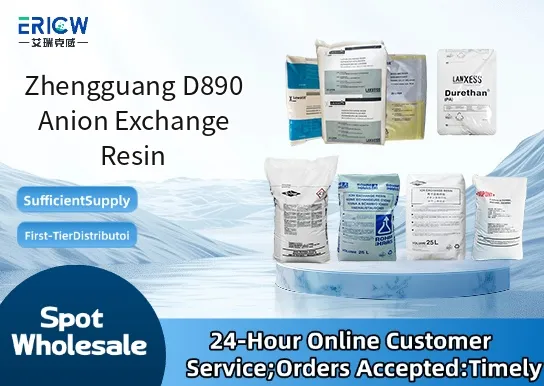
Highly selective for nitrate, sulfate, and chromate anions in complex water matrices.
Exceptional chemical stability in alkaline and moderately acidic conditions (pH 1–13).
Low pressure drop and excellent hydraulic performance in fixed-bed and column operations.
Regenerable with standard sodium chloride solutions, enabling cost-effective cyclic operation.
Uniform spherical beads with narrow particle size distribution for consistent flow dynamics.
Drinking water treatment for nitrate and sulfate removal to meet WHO and EPA standards.
Industrial wastewater polishing in electroplating and metal finishing facilities.
Pre-treatment of feedwater for high-purity steam generation in power plants.
Recovery and concentration of valuable anions (e.g., molybdate, tungstate) in hydrometallurgical processes.
| Chemical Type | Strong base anion exchange resin, Type I quaternary ammonium functional group |
| Product Form | Moist, gel-type spherical beads |
| Appearance | Off-white to light yellow, translucent beads |
| Functional Group Capacity (Cl⁻ form) | ≥ 1.2 eq/L (dry basis) |
| Particle Size Range | 0.3–1.2 mm (≥ 95% retained on 16–60 mesh screens) |
| Moisture Content | 45–50% (as shipped) |
| Maximum Operating Temperature | 60 °C |
| Storage Conditions | Store at 5–35 °C, avoid freezing and direct sunlight |
Q1: What is the primary functional group and matrix type of Zhengguang D890?
A: Zhengguang D890 is a gel-type, strongly basic anion exchange resin with quaternary ammonium functional groups (Type I) grafted onto a crosslinked polystyrene-divinylbenzene (PS-DVB) matrix.
Q2: In which industrial applications is D890 most commonly deployed?
A: D890 is widely used in water demineralization, pharmaceutical-grade water polishing, nitrate/nitrite removal from drinking water, and as a polishing step in ultrapure water systems for electronics and power generation industries.
Q3: How does D890 perform in the presence of organic fouling or silica?
A: As a standard gel-type strong base anion resin, D890 has limited resistance to organic fouling and may experience reduced capacity in high-organic or high-silica feedwaters; pretreatment (e.g., activated carbon, coagulation) is recommended to maintain optimal service life and regeneration efficiency.
Q4: What are typical regeneration conditions for D890?
A: D890 is typically regenerated with sodium hydroxide (NaOH) at concentrations between 2% and 4% w/w, with bed volumes and contact times adjusted based on service cycle length and contaminant loading; full regeneration requires adequate backwash and rinse steps to remove residual regenerant and fines.
Contact With Us:
E-mail: wangxingqiang@ericwchem.com
Have a Questions? Call Us:
Add:
Building A1, Jiete Industrial Park, Huangpu District, Guangzhou City, Guangdong Province, China