English
 Español
 tiếng việt
 русский
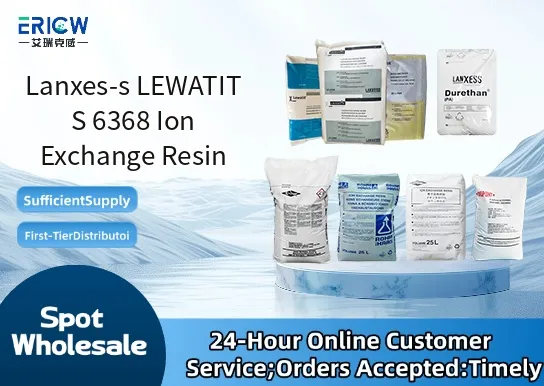
Highly selective for divalent cations such as Ca²⁺ and Mg²⁺ in softening applications.
Optimized bead uniformity and mechanical strength for extended service life under high-flow conditions.
Low osmotic swelling and excellent chemical stability in repeated regeneration cycles with NaCl brine.
Designed for low pressure drop and minimal fines generation in fixed-bed ion exchange systems.
Complies with global food-grade and potable water regulations including NSF/ANSI Standard 61.
Drinking water softening in municipal and point-of-entry (POE) treatment systems.
Pre-treatment for reverse osmosis (RO) and nanofiltration (NF) feed water in industrial plants.
Boiler feedwater conditioning to prevent scale formation in low-to-medium pressure steam systems.
Food and beverage processing where consistent calcium/magnesium removal is critical for product quality.
Pharmaceutical water systems requiring USP Purified Water or WFI-grade cation control.
| Chemical Type | Strong acid cation (SAC), sulfonated polystyrene-divinylbenzene gel resin |
| Product Form | Moist, spherical beads |
| Appearance | Amber, translucent beads |
| Functional Group | Sulfonic acid (–SO₃H) |
| Ion Form | Na⁺ form (ready for service) |
| Exchange Capacity (min.) | 1.8 mmol/mL (wet volume) or ≥2.0 eq/L (dry basis) |
| Particle Size Range | 0.315–1.25 mm (≥95% retained on 0.315 mm sieve) |
| Moisture Content | 45–50% (w/w) |
Q1: What is the primary functional group and ionic form of LEWATIT S 6368?
A: LEWATIT S 6368 is a strongly acidic cation exchange resin based on a sulfonated polystyrene-divinylbenzene matrix, supplied in the sodium (Na⁺) form. Its high crosslinking density contributes to excellent mechanical stability and selectivity for multivalent cations.
Q2: In which industrial applications is this resin most commonly deployed?
A: LEWATIT S 6368 is widely used in high-purity water treatment for power generation and microelectronics, softening of process water with high hardness or iron content, and selective removal of heavy metal ions (e.g., Cu²⁺, Ni²⁺, Pb²⁺) from industrial effluents and rinse waters.
Q3: How does LEWATIT S 6368 differ from standard gel-type strong acid cation resins?
A: Unlike conventional gel-type resins, S 6368 features a macroporous structure that provides superior kinetic performance in solutions containing suspended solids or organic fouling potential. It maintains consistent exchange capacity and regeneration efficiency even under challenging feedwater conditions.
Q4: What regeneration chemicals are recommended, and how does regeneration efficiency compare to other resins?
A: Sodium chloride (NaCl) is the standard regenerant, though it can also be effectively regenerated with hydrochloric acid (HCl) when full H⁺ form operation is required. Due to its macroporous morphology and uniform bead structure, S 6368 typically achieves higher regeneration efficiency and lower regenerant consumption per equivalent compared to many gel-type alternatives.
Contact With Us:
E-mail: wangxingqiang@ericwchem.com
Have a Questions? Call Us:
Add:
Building A1, Jiete Industrial Park, Huangpu District, Guangzhou City, Guangdong Province, China