English
 Español
 tiếng việt
 русский
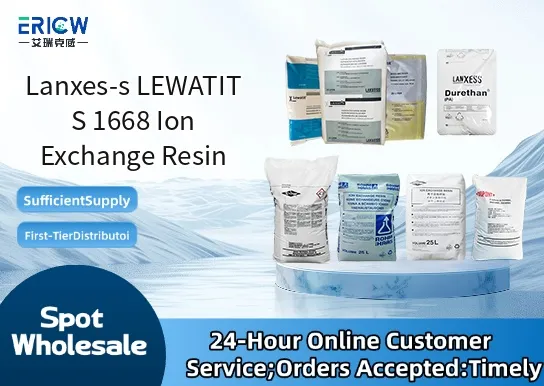
Highly selective for divalent cations such as Ca²⁺ and Mg²⁺, enabling efficient softening with minimal sodium leakage.
Exceptional chemical and osmotic stability, suitable for repeated regeneration cycles in demanding industrial environments.
Uniform spherical bead morphology ensures low pressure drop and optimal hydraulic performance in fixed-bed columns.
Optimized for high-capacity operation under variable feedwater conditions, including elevated turbidity and organic loadings.
Complies with FDA 21 CFR §173.25 and EU Regulation (EC) No. 1935/2004 for indirect food contact applications.
Drinking water softening in municipal and decentralized treatment plants.
Pretreatment for reverse osmosis (RO) and nanofiltration (NF) systems in pharmaceutical and electronics manufacturing.
Boiler feedwater conditioning in power generation and industrial steam systems.
Process water purification for beverage production and dairy processing facilities.
Recovery of valuable metal ions from industrial effluents in electroplating and metal finishing operations.
| Chemical Type | Sulfonated polystyrene-divinylbenzene copolymer (strong acid cation exchanger) |
| Product Form | Moist, gel-type spherical beads |
| Appearance | Opaque amber to light brown beads |
| Functional Group | Sulfonic acid (–SO₃H) |
| Ionic Form | Sodium form (Na⁺) |
| Moisture Content | 45–50 % (w/w) |
| Particle Size Range | 0.3–1.2 mm (≥95 % retained on 0.3 mm sieve) |
| Uniformity Coefficient | ≤1.6 |
Q1: What is the primary functional group and ionic form of LEWATIT S 1668?
A: LEWATIT S 1668 is a strongly acidic cation exchange resin based on a styrene-divinylbenzene matrix, functionalized with sulfonic acid groups. It is supplied in the sodium (Na⁺) form, enabling efficient removal of multivalent cations such as calcium and magnesium from aqueous streams.
Q2: In which industrial applications is this resin most commonly deployed?
A: LEWATIT S 1668 is widely used for softening and demineralization in boiler feedwater preparation, food & beverage processing (e.g., sugar decolorization support and juice clarification), pharmaceutical water systems, and wastewater treatment where selective hardness removal or base metal recovery is required.
Q3: How does LEWATIT S 1668 compare to standard gel-type cation resins in terms of physical stability and operating conditions?
A: As a macroporous resin, LEWATIT S 1668 offers enhanced mechanical and osmotic stability compared to conventional gel types—making it particularly suitable for applications involving high flow rates, frequent regeneration cycles, or feedwaters containing suspended solids or organic foulants.
Q4: What regeneration chemicals are compatible with this resin, and what considerations apply?
A: Sodium chloride (NaCl) is the standard regenerant for softening service. For full demineralization, strong mineral acids such as hydrochloric or sulfuric acid may be used depending on system design. Regeneration efficiency depends on contact time, concentration, and temperature—optimal performance is maintained within typical municipal and industrial water temperature ranges.
Contact With Us:
E-mail: wangxingqiang@ericwchem.com
Have a Questions? Call Us:
Add:
Building A1, Jiete Industrial Park, Huangpu District, Guangzhou City, Guangdong Province, China