English
 Español
 tiếng việt
 русский
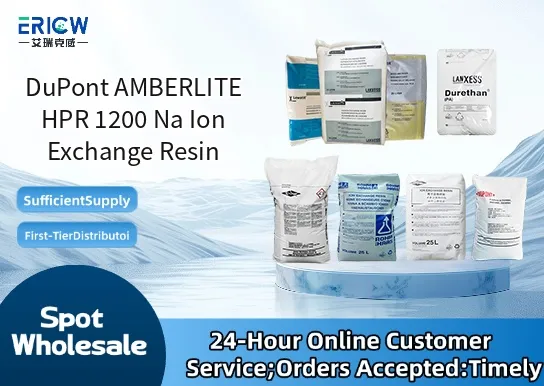
High-capacity, gel-type strong acid cation exchange resin in sodium form.
Optimized for high-efficiency softening with excellent kinetic performance and low pressure drop.
Superior physical and chemical stability across wide pH (0–14) and temperature ranges (up to 120 °C).
Consistent bead uniformity and high mechanical strength, minimizing fines generation during service cycles.
Regenerable with low-concentration sodium chloride solution, supporting sustainable operation and reduced brine consumption.
Industrial boiler feedwater softening for power generation and steam systems.
Pretreatment of reverse osmosis (RO) feed water to prevent scale formation on membranes.
Softening in food & beverage processing where consistent low-hardness water is critical.
Water conditioning for pharmaceutical manufacturing and clean utility water systems.
Municipal and commercial water softening installations requiring reliable, long-cycle performance.
| Chemical Type | Strong acid cation (sulfonic acid), polystyrene-divinylbenzene copolymer |
| Product Form | Moist, spherical beads in sodium (Na⁺) form |
| Appearance | Beige to light brown, free-flowing spherical beads |
| Functional Group | Sulfonic acid (–SO₃H) |
| Ion Form | Sodium (Na⁺) |
| Moisture Content | 45–50% (as shipped) |
| Particle Size Range | 0.3–1.2 mm (95% retained on 16 mesh, passes 50 mesh) |
| Uniformity Coefficient | ≤ 1.7 |
Q1: What is the primary functional form of AMBERLITE HPR 1200 Na resin?
A: AMBERLITE HPR 1200 Na is supplied in the sodium (Na⁺) form and is specifically designed for softening applications where calcium and magnesium ions are exchanged for sodium ions in aqueous streams.
Q2: Is this resin suitable for potable water treatment?
A: Yes — AMBERLITE HPR 1200 Na is manufactured and tested to meet industry-recognized standards for use in drinking water applications, including compliance with NSF/ANSI Standard 61 for extractables. Final regulatory acceptance depends on local authority review and system validation.
Q3: How does AMBERLITE HPR 1200 Na differ from standard gel-type cation resins?
A: It features a macroporous polystyrene matrix with high crosslinking, offering enhanced physical stability, superior resistance to osmotic shock, and improved performance in challenging feed waters containing suspended solids or organics compared to conventional gel-type resins.
Q4: What regeneration chemicals are recommended for this resin?
A: Sodium chloride (NaCl) brine is the standard regenerant. The resin is not intended for acid or caustic regeneration, as it is optimized for softening rather than demineralization service.
Q5: Can AMBERLITE HPR 1200 Na be used in high-flow or high-pressure systems?
A: Yes — its robust macroporous structure supports operation across a wide range of flow rates and pressures typical of industrial softening systems. Design considerations such as bed depth, flow distribution, and backwash requirements should follow DuPont’s engineering guidelines for optimal long-term performance.
Contact With Us:
E-mail: wangxingqiang@ericwchem.com
Have a Questions? Call Us:
Add:
Building A1, Jiete Industrial Park, Huangpu District, Guangzhou City, Guangdong Province, China