English
 Español
 tiếng việt
 русский
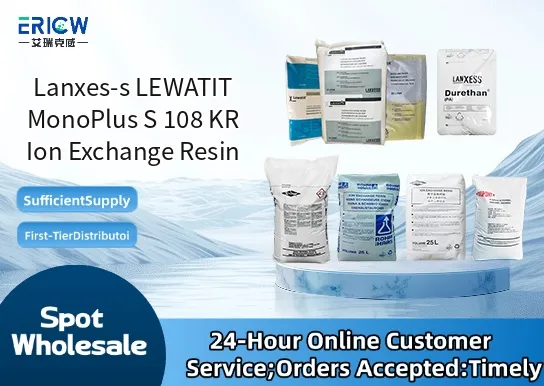
Highly uniform spherical beads ensure consistent hydraulic performance and low pressure drop across service cycles.
Optimized macroporous matrix provides excellent kinetic performance for rapid ion exchange, even with large or charged molecules.
Enhanced chemical and osmotic stability enables reliable operation in demanding industrial regeneration environments.
Low fines generation minimizes system fouling and extends column run times between backwashes.
Designed specifically for potassium-selective removal and recovery applications in high-salinity feed streams.
Potassium removal from pharmaceutical process water to meet stringent USP/EP monograph requirements.
Recovery of potassium ions from fertilizer production effluents and agricultural runoff streams.
Polishing step in biopharmaceutical buffer preparation where sodium/potassium ratio control is critical.
Selective softening of high-hardness industrial cooling water containing elevated K⁺ concentrations.
Pre-concentration and purification of potassium salts in fine chemical synthesis workflows.
| Chemical Type | Macroporous, strongly acidic cation exchange resin (sulfonic acid functional group) |
| Product Form | Moist, spherical beads |
| Appearance | Light amber to brown, translucent beads |
| Functional Group | –SO₃H (sulfonic acid) |
| Ionic Form | Potassium (K⁺) form as supplied |
| Exchange Capacity (min.) | 1.8 eq/L (dry weight basis) |
| Mean Particle Size | 600–800 µm |
| Uniformity Coefficient (max.) | 1.6 |
Q1: What is the primary functional group and ionic form of LEWATIT MonoPlus S 108 KR?
A: LEWATIT MonoPlus S 108 KR is a strongly acidic cation exchange resin based on a styrene-divinylbenzene matrix, functionalized with sulfonic acid groups. It is supplied in the potassium (K⁺) form, making it particularly suitable for selective removal of multivalent cations and softening applications where sodium leakage must be minimized.
Q2: How does S 108 KR differ from standard sodium-form strong acid cation resins in water treatment?
A: Unlike conventional Na⁺-form resins, the potassium form of S 108 KR offers reduced sodium breakthrough in polishing stages and improved selectivity for hardness ions (Ca²⁺, Mg²⁺) over monovalent ions. This supports higher-quality treated water in sensitive downstream processes, such as pharmaceutical or ultrapure water production, without introducing sodium into the product stream.
Q3: Can this resin be used in food-grade or pharmaceutical water systems?
A: Yes — LEWATIT MonoPlus S 108 KR is manufactured and tested to meet requirements for use in pharmaceutical and food-contact water purification. It complies with relevant global pharmacopoeial standards for ion exchange resins and is designed for regeneration with common reagents like potassium chloride or dilute mineral acids, supporting validation under GMP-aligned operational protocols.
Q4: What are key handling and storage recommendations for this resin?
A: Store in original sealed packaging at temperatures between 5 °C and 40 °C, avoiding freezing and direct sunlight. Once unpacked, keep moist and protected from contamination. Prior to service, rinse thoroughly with deionized water to remove fines and residual manufacturing agents. Avoid prolonged exposure to oxidizing agents or extreme pH conditions outside the recommended operating range.
Contact With Us:
E-mail: wangxingqiang@ericwchem.com
Have a Questions? Call Us:
Add:
Building A1, Jiete Industrial Park, Huangpu District, Guangzhou City, Guangdong Province, China