English
 Español
 tiếng việt
 русский
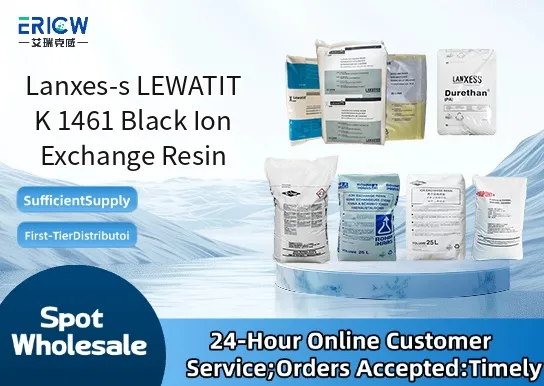
Highly stable macroporous polystyrene-divinylbenzene matrix engineered for robust performance under demanding chemical and thermal conditions.
Optimized for selective removal of heavy metal cations—including lead, copper, nickel, and cadmium—from industrial process streams.
Excellent resistance to oxidation and fouling, ensuring extended service life in complex wastewater matrices.
Consistent spherical bead morphology with narrow particle size distribution (0.4–1.2 mm) for low pressure drop and uniform hydraulic flow.
Regenerable with standard mineral acids (e.g., HCl or H₂SO₄), enabling cost-effective cyclic operation.
Heavy metal recovery and polishing in metal finishing and electroplating effluent treatment.
Pre-treatment for ultrapure water systems requiring stringent trace metal control.
Removal of toxic cations from mining leachate and hydrometallurgical process solutions.
Decentralized wastewater treatment in electronics manufacturing facilities.
Ion exchange polishing step in pharmaceutical water purification systems compliant with USP/EP standards.
| Chemical Type | Macroporous strong acid cation exchange resin (sulfonated polystyrene-DVB) |
| Product Form | Moist, spherical beads |
| Appearance | Black, opaque beads |
| Functional Group | Sulfonic acid (–SO₃H) |
| Ion Form | H⁺ form (ready-to-use) |
| Particle Size Range | 0.4–1.2 mm |
| Moisture Content | 45–55% (as supplied) |
| Maximum Operating Temperature | 120 °C |
Q1: What is the primary functional group and ion exchange mechanism of LEWATIT K 1461?
A: LEWATIT K 1461 is a strongly basic anion exchange resin with quaternary ammonium functional groups (Type I), designed for efficient removal of anionic impurities—including silicates, nitrates, sulfates, and organic acids—via reversible ion exchange in aqueous systems.
Q2: Is this resin suitable for use in high-purity water production, such as for pharmaceutical or electronics-grade applications?
A: Yes, LEWATIT K 1461 is commonly employed in polishing stages of high-purity water systems due to its high chemical stability, low extractables, and excellent regeneration efficiency—particularly when combined with cation exchange resins in mixed-bed configurations.
Q3: How does LEWATIT K 1461 perform in the presence of oxidizing agents or elevated temperatures?
A: As a Type I strong base resin, it offers good resistance to moderate oxidative stress and sustained operation up to approximately 40 °C; however, prolonged exposure to strong oxidants (e.g., chlorine, peroxides) or temperatures above 50 °C may accelerate functional group degradation and reduce service life.
Q4: What are typical regeneration requirements for this resin?
A: Regeneration is typically performed using sodium hydroxide (NaOH) solutions at standard concentrations and flow rates used for strong base anion resins; optimal conditions depend on feedwater composition and system design, but full capacity recovery is generally achieved with conventional regenerant dosing protocols.
Contact With Us:
E-mail: wangxingqiang@ericwchem.com
Have a Questions? Call Us:
Add:
Building A1, Jiete Industrial Park, Huangpu District, Guangzhou City, Guangdong Province, China