English
 Español
 tiếng việt
 русский
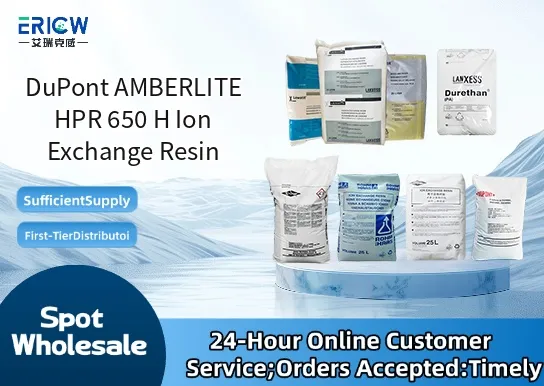
High-purity, gel-type strong acid cation exchange resin in hydrogen form.
Optimized for high-efficiency deionization and polishing in ultrapure water systems.
Excellent physical and chemical stability with low fines generation and high attrition resistance.
Consistent spherical bead morphology ensures uniform flow distribution and low pressure drop.
Low sodium leakage and high total exchange capacity for reliable conductivity control.
Final polishing stage in power plant boiler feedwater treatment systems.
Ultrapure water (UPW) production for semiconductor manufacturing facilities.
Pharmaceutical-grade water purification meeting USP/EP/JP pharmacopeial requirements.
Electronics industry rinse water purification requiring sub-ppb ionic contamination control.
High-recovery reverse osmosis (RO) polishers in industrial demineralization plants.
| Chemical Type | Strong acid cation (sulfonic acid), hydrogen form |
| Product Form | Moist, spherical beads |
| Appearance | Amber, translucent gel beads |
| Functional Group | –SO₃H |
| Total Exchange Capacity (dry basis) | ≥ 2.0 eq/L (as H⁺) |
| Moisture Content | 45–50% (w/w) |
| Particle Size Range | 0.3–1.2 mm (95% retained on 16 mesh, passes 50 mesh) |
| Uniformity Coefficient | ≤ 1.7 |
Q1: What is the primary functional form and intended use of AMBERLITE HPR 650 H?
A: AMBERLITE HPR 650 H is supplied in the hydrogen (H⁺) form and is specifically designed for high-purity water polishing applications, particularly in power generation, pharmaceutical water systems, and microelectronics ultrapure water (UPW) loops where low sodium and silica leakage are critical.
Q2: How does HPR 650 H differ from standard gel-type cation resins?
A: Unlike conventional gel-type resins, HPR 650 H features a macroporous polystyrene-divinylbenzene matrix with high crosslinking and optimized surface area, delivering superior kinetic performance, enhanced resistance to organic fouling, and improved regeneration efficiency—especially under low-ionic-strength conditions typical in final polishing stages.
Q3: Can this resin be used in mixed-bed configurations, and what precautions should be taken during commissioning?
A: Yes, HPR 650 H is commonly deployed in mixed-bed units with compatible OH-form anion resins. Prior to service, thorough backwashing and air scouring are recommended to ensure proper bed stratification, and resin-to-resin compatibility testing is advised to confirm minimal cross-contamination and optimal hydraulic distribution.
Q4: What regeneration chemicals and typical operating conditions are recommended?
A: Regeneration is typically performed using dilute hydrochloric acid (HCl), with concentration and dosage adjusted based on service run length and influent quality. Operation at low flow rates (e.g., 2–6 BV/h) and controlled temperature (5–40 °C) helps maximize capacity and minimize ionic leakage.
Contact With Us:
E-mail: wangxingqiang@ericwchem.com
Have a Questions? Call Us:
Add:
Building A1, Jiete Industrial Park, Huangpu District, Guangzhou City, Guangdong Province, China